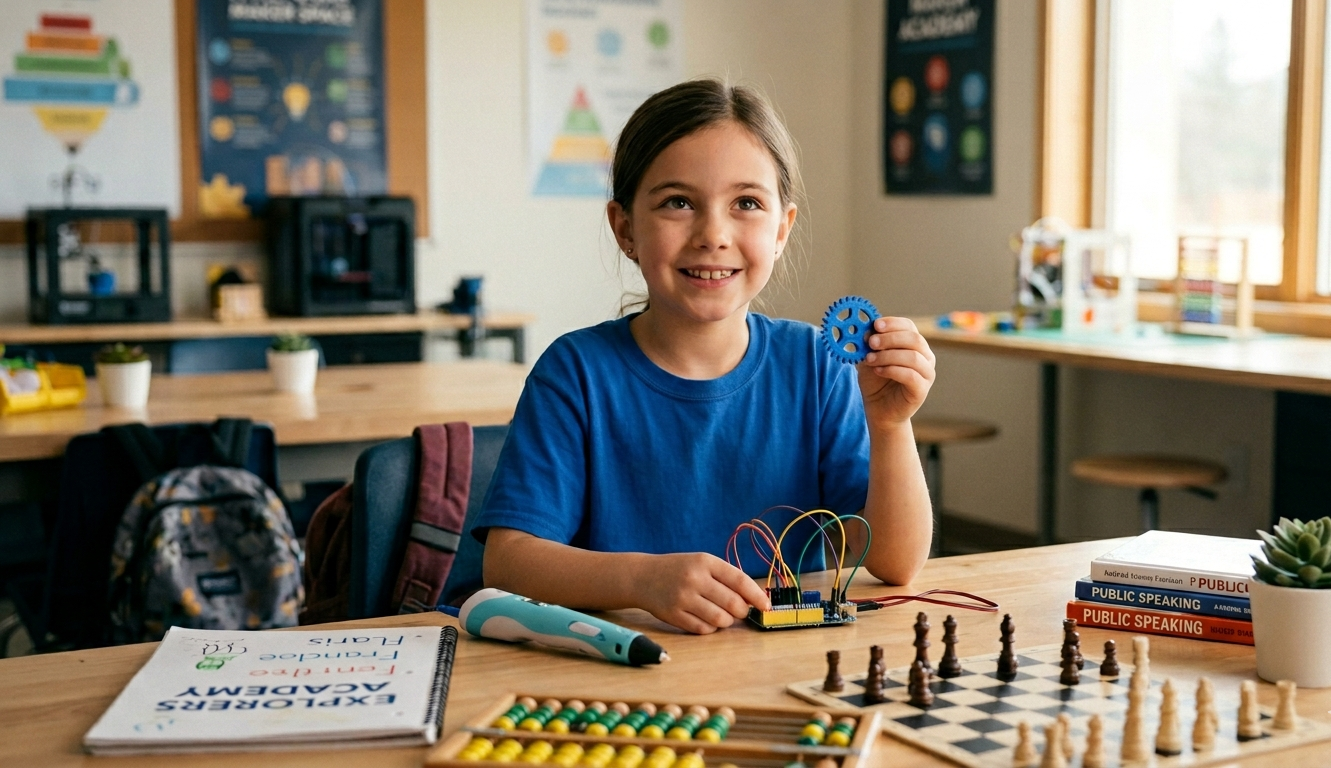
What Does Progress Actually Look Like After 3 Months in a STEM Program?
If your child started a STEM program in Surrey or Delta about three months ago, you have probably asked yourself this at least once: "Is this actually doing anything?"
It's a fair question. Three months isn't long enough to build a robot empire or become a coding prodigy and if a program is promising that, it's overselling. But three months is long enough for real, measurable change to show up, if you know what to look for.
The problem is that most parents are checking for the wrong signals, things like trophies, finished projects or a sudden love of math homework. Real STEM progress at the three-month mark looks quieter than that but it matters more because it's the foundation everything else builds on.
This guide breaks down exactly what progress looks like in three months, why it matters more for long-term success than flashy short-term wins and what parents in Surrey and Delta should look for when evaluating a STEM program near me.
Why the 3-Month Mark Matters in STEM Learning
Three months, roughly 10 to 12 weekly sessions is a meaningful checkpoint in skill development for one simple reason: it's usually long enough to move past the "novelty phase" and into the "habit-building phase."
- Month 1 is about exposure: new tools, new vocabulary, new ways of thinking.
- Month 2 is about friction: this is where kids hit their first real challenges and either build resilience or start disengaging.
- Month 3 is where a pattern becomes visible: is the child applying skills independently or still needing constant guidance?
In a well-structured program, month three is when the shift from "learning about STEM" to "doing STEM" starts to become visible.
The Real Signs of Progress After 3 Months
1. Your Child Attempts Problems Before Asking for Help
This is one of the clearest, most underrated signs of progress. A child who used to ask "what do I do?" within seconds of hitting a snag now tries two or three things first, even if those attempts fail.
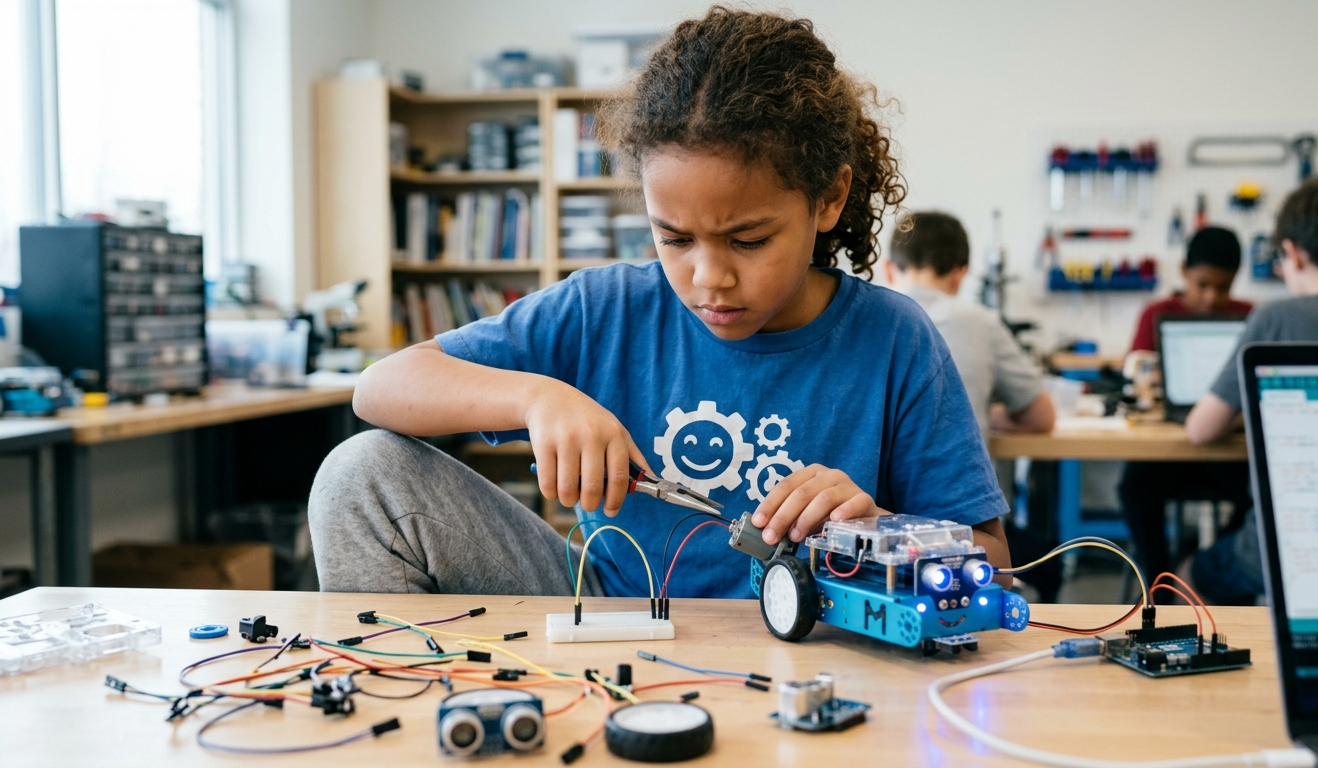
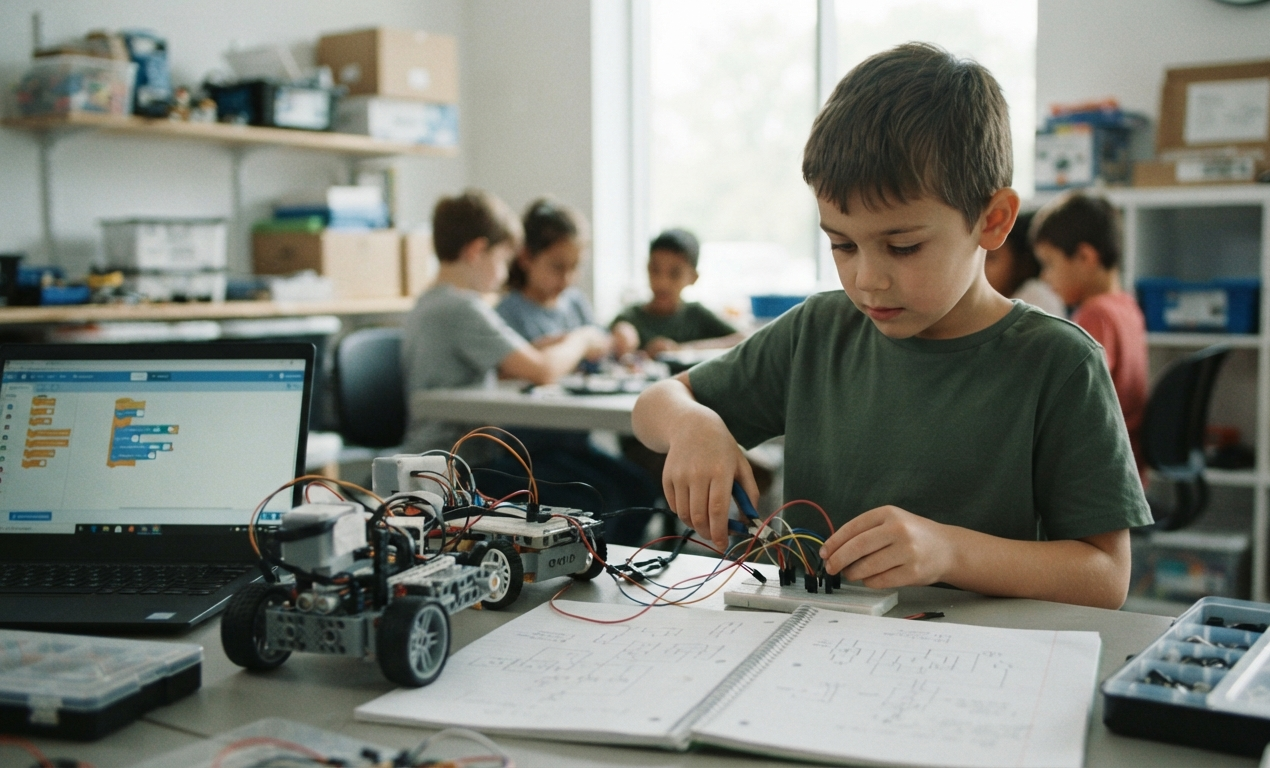
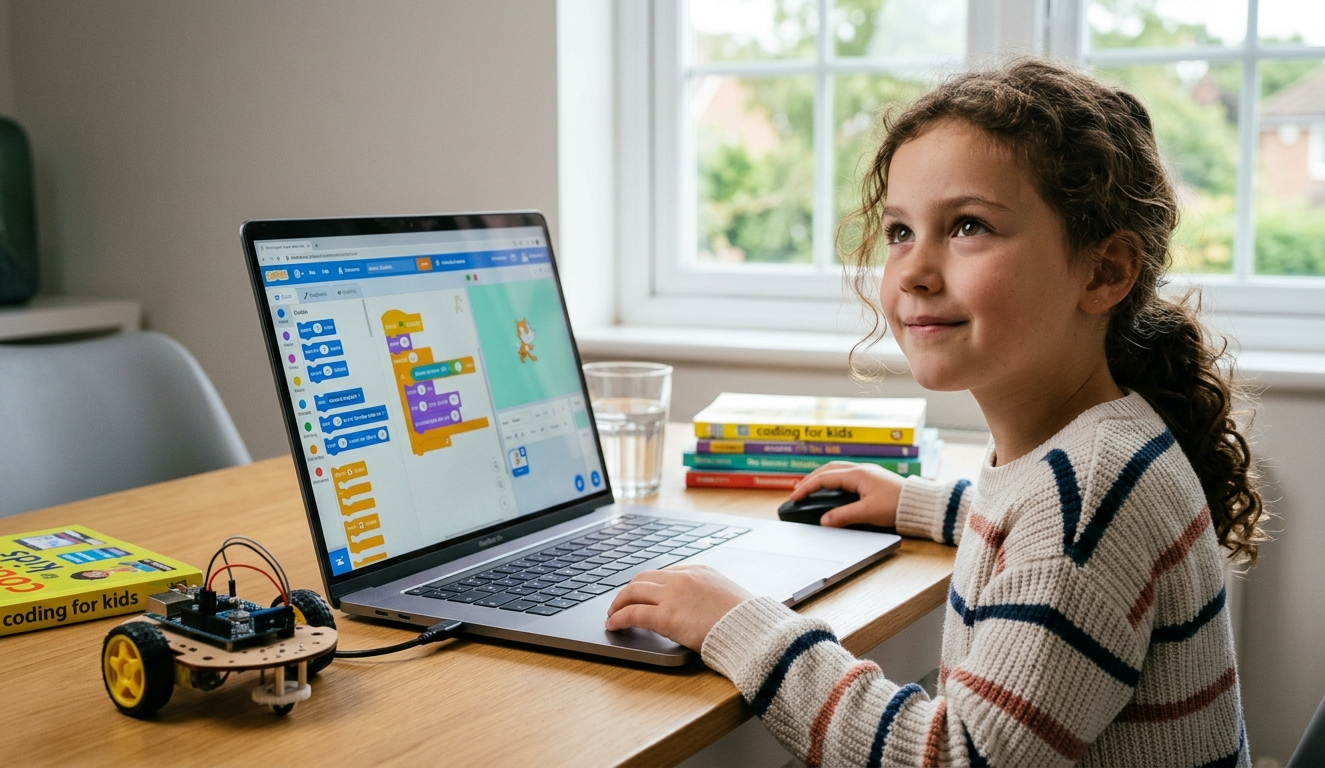
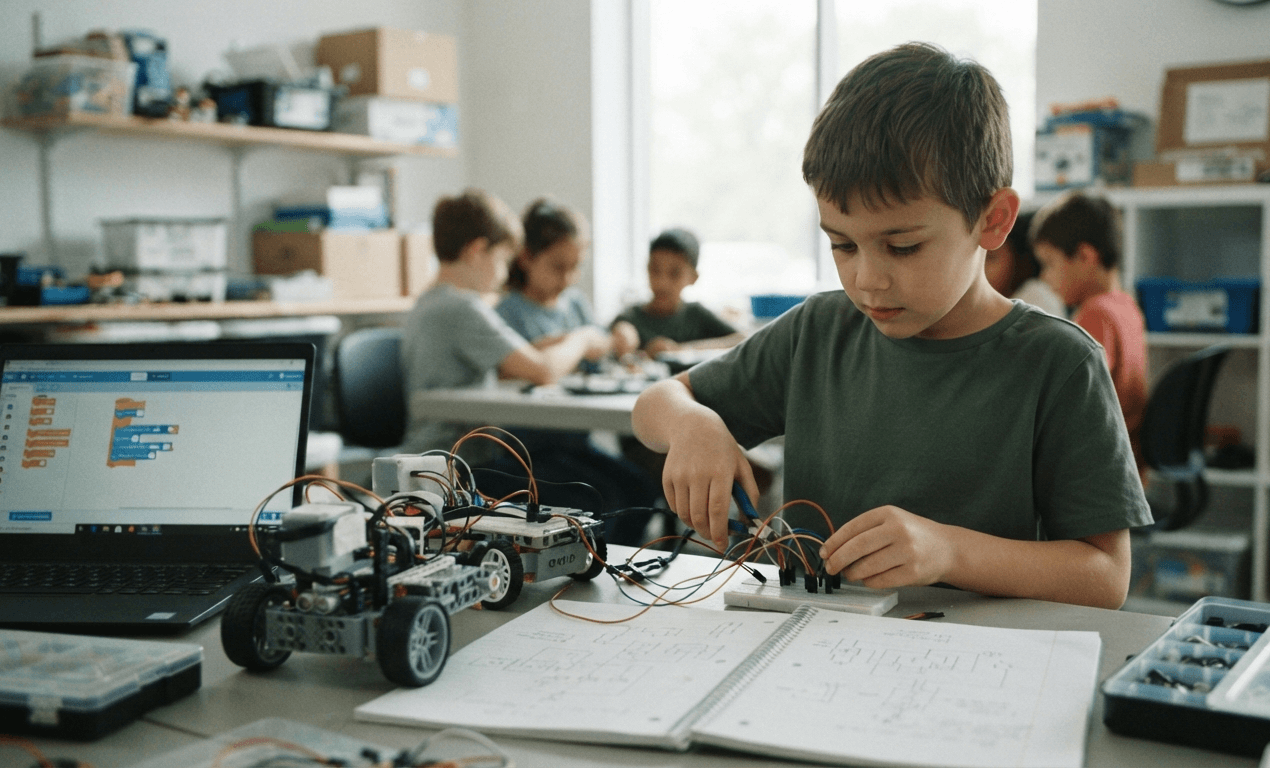
What this looks like in practice: debugging a piece of code line by line before calling the instructor over, or testing a different way to balance a structure before asking for a hint.
2. They Can Explain What They are Doing, Not Just Do It
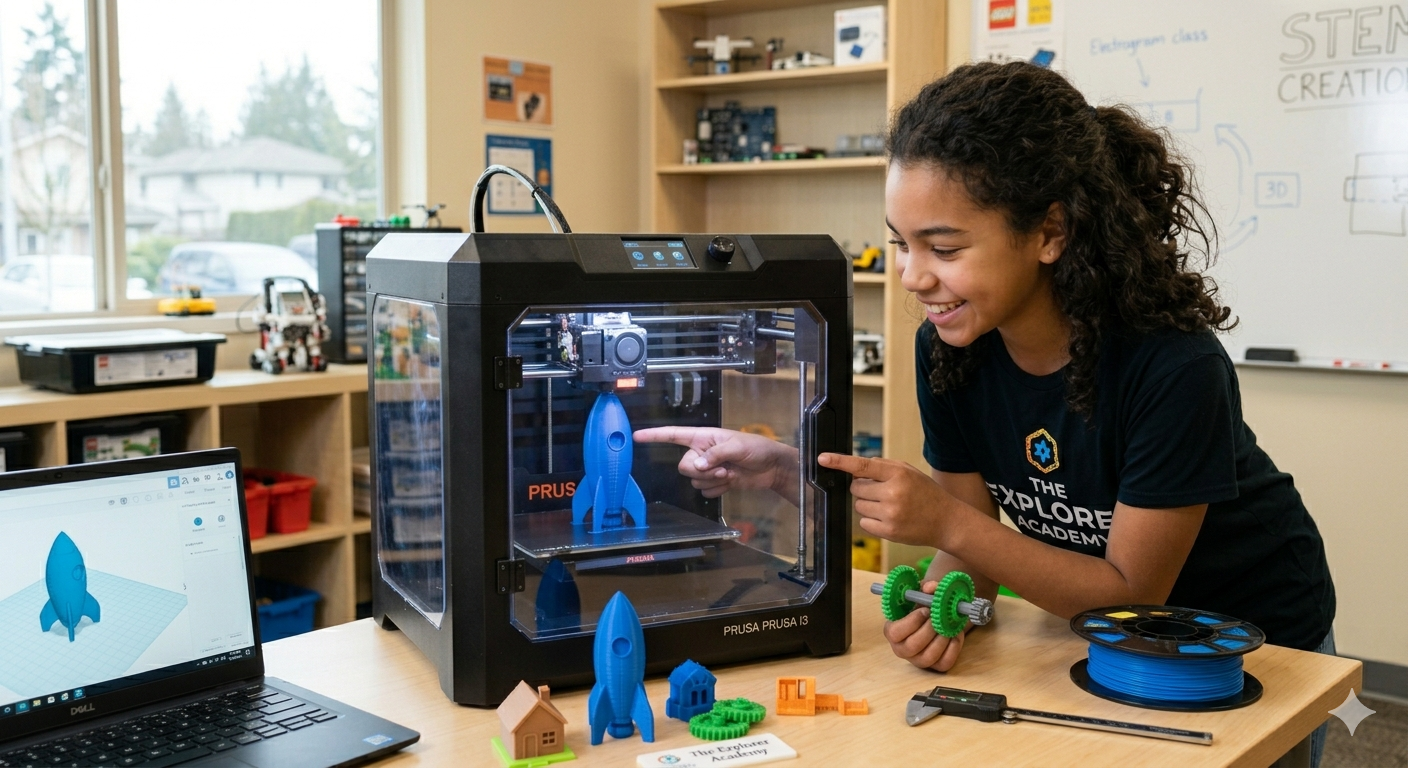
Real understanding shows up in language, not just output. After three months, a child in a well-run STEM program should be able to explain why they made a decision: why they used a loop instead of repeating code, why they chose a certain gear ratio, why an experiment failed.
If your child can demonstrate a skill but can't explain the reasoning behind it, that's a sign the program may be teaching by rote rather than by understanding.
3. Mistakes Stop Being a Big Deal
One of the most important and most invisible forms of progress is emotional rather than technical. Kids who once got frustrated or gave up at the first wrong answer start treating mistakes as normal steps in the process, not failures.
This shift in mindset, often called a "growth mindset" in educational psychology, is one of the strongest predictors of long-term success in STEM fields, far more than any single skill learned in a 12-week block.
4. Vocabulary and Concepts Start Showing Up at Home
Progress often shows up outside the classroom before it shows up inside it. Parents frequently notice their child using terms like "variable," "circuit," "hypothesis," or "iteration" casually at the dinner table, or pointing out real-world STEM concepts unprompted, like noticing gears on a bike or asking how a traffic light system works.
5. Projects Get More Ambitious, Not Just More Complex
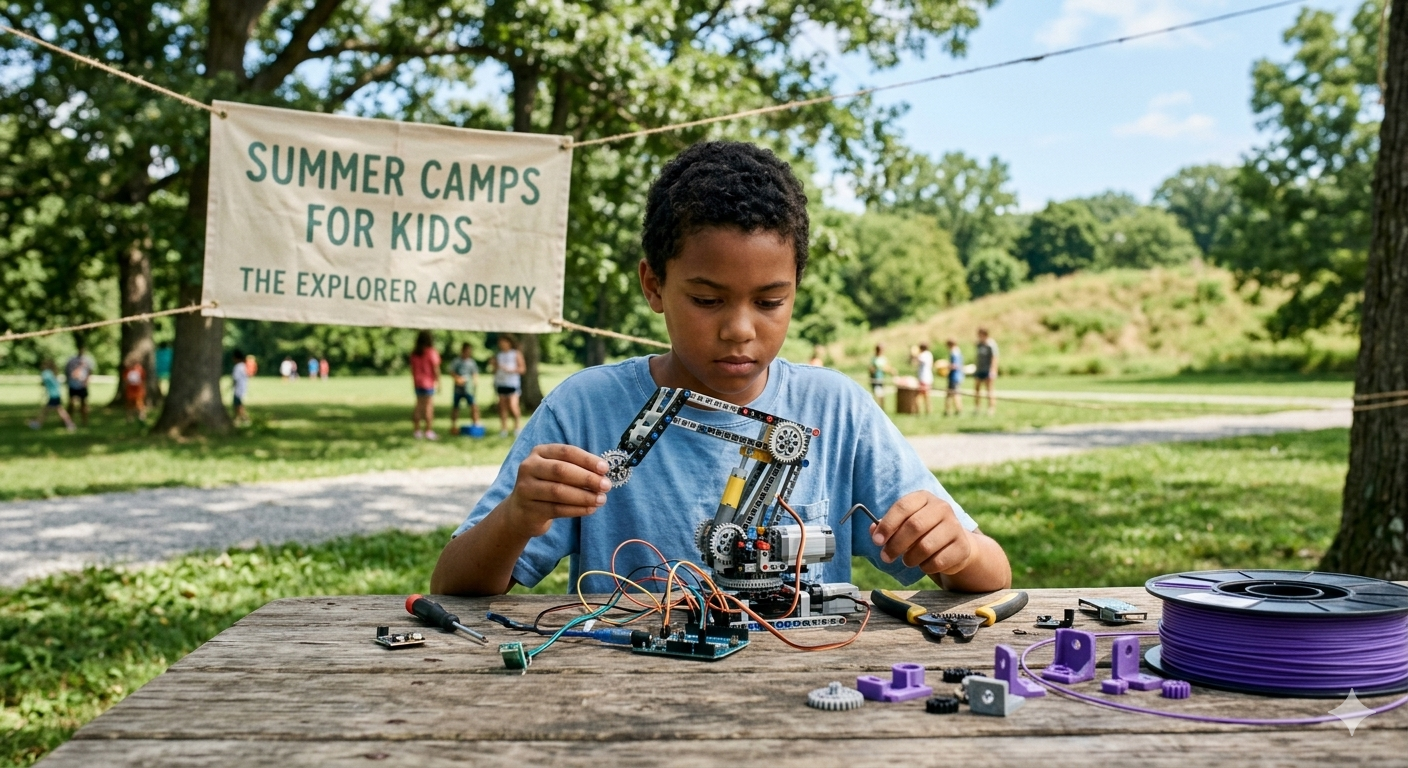
Look at what your child chooses to build or solve when given free choice. At month one, most kids stick to templates. By month three, kids in a strong program start modifying instructions, combining ideas or asking, "can I try it a different way instead?" That instinct to experiment is a bigger marker of progress than technical complexity alone.
6. They Can Work Through a Multi-Step Problem Without Losing the Thread
Executive function, the ability to hold a multi-step process in your head and follow it through, develops noticeably over a three-month period in structured STEM environments. Watch for whether your child can complete a project across multiple sessions without needing everything re-explained each time.
What Progress Does NOT Look Like (Common Misconceptions)
It's just as important to know what isn't a fair measure of progress at the three-month mark:
- A finished, impressive project. Some of the best learning happens in projects that fail or get abandoned halfway, and that's still progress.
- Perfect scores or flawless code on the first try. Struggle is part of the process, not a sign something's wrong.
- Constant excitement every single session. Some sessions will feel like a grind. That's normal in any real skill-building process, not a red flag.
- Comparing your child to another child in the same class. Every child starts from a different point, so progress needs to be measured against their own baseline, not a classmate's.
What Surrey and Delta Parents Should Specifically Look For
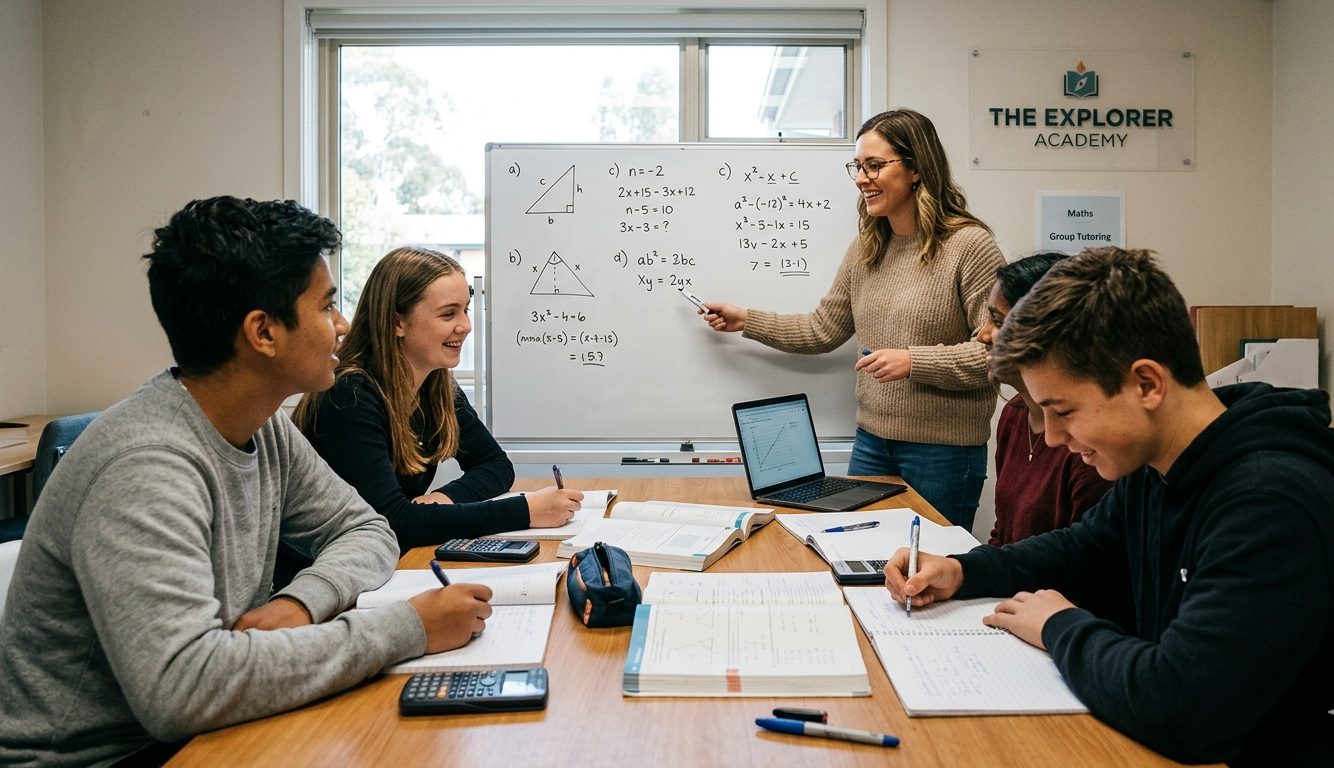
Families in Surrey and Delta have a growing number of STEM options to choose from, from school-based clubs to weekend robotics and coding programs. If you are evaluating whether a program near you is actually delivering results at the three-month mark, here's what to check:
- Does the program give structured feedback, not just "great job" comments? Ask instructors for specific examples of what your child has improved on.
- Is there a visible skill progression across sessions, or does every class feel like a repeat of the last one with a different theme?
- Are instructors trained in age-appropriate STEM teaching methods, not just subject-matter experts without teaching experience?
- Is there a portfolio, project log or take-home work that shows a trail of what your child has built or solved over time?
- Does the program adjust pacing for your child or is everyone moving through identical material regardless of skill level?
Local programs serving the Surrey and Delta community should also be able to speak to how they accommodate different school schedules, class sizes, and age groups common in the area, a sign they are genuinely tailored to local families rather than running a generic curriculum.
How to Talk to Your Child's Instructor About Progress
At the three-month checkpoint, ask specific, targeted questions rather than the general "how's it going?" Try:
- "What's one thing my child could barely do in the first session that they can now do independently?"
- "Where does my child still need the most support?"
- "What would the next three months focus on, based on where they are now?"
A strong program should be able to answer these clearly and specifically. Vague or overly positive answers with no detail are a sign the progress isn't actually being tracked.
Frequently Asked Questions
Q: How long does it typically take to see results in a STEM program?
Most children show early signs of progress, like increased independence and willingness to try, within 8 to 12 weeks (about 3 months) of consistent, weekly participation. Deeper technical skills, such as advanced coding or engineering design, typically build over 6 to 12 months.
Q: My child doesn't seem excited about STEM after 3 months. Should I be worried?
Not necessarily. Enthusiasm can be uneven, especially during challenging units. Focus on whether your child is engaging with problems and building independence, rather than whether every session feels fun.
Q: What age is best to start a STEM program?
Most STEM programs in Surrey and Delta accept children from around age 5 through the teenage years, with curriculum adjusted by age group. Younger children benefit from hands-on, exploratory STEM activities, while older kids can handle structured coding, robotics or engineering challenges.
Q: How is progress measured in a STEM program if there are no formal tests?
Progress is typically measured through project complexity, independence in problem-solving, ability to explain concepts and consistency in applying skills across sessions, rather than through traditional test scores.
Q: Are STEM programs in Surrey and Delta different from school STEM classes?
Yes. Community and after-school STEM programs typically offer smaller group sizes, hands-on project-based learning, and more flexibility to move at each child's pace, compared to standard school curriculum, which has to serve a full class at a fixed pace.
Conclusion
Progress after three months in a STEM program rarely looks like a finished invention or a viral science fair project. It looks like a child who tries before asking for help, explains their thinking, treats mistakes as part of the process and takes on slightly bigger challenges than they did on day one. Those quiet shifts are the real predictors of whether a child will thrive in STEM long-term, far more than any single project outcome.
If you are a parent in Surrey or Delta wondering whether your child's current program is delivering this kind of progress, or if you are looking for a STEM program built around exactly these milestones, it might be time for a closer look at how progress is actually tracked, not just promised.
Ready to See Real Progress in Your Child's STEM Journey?
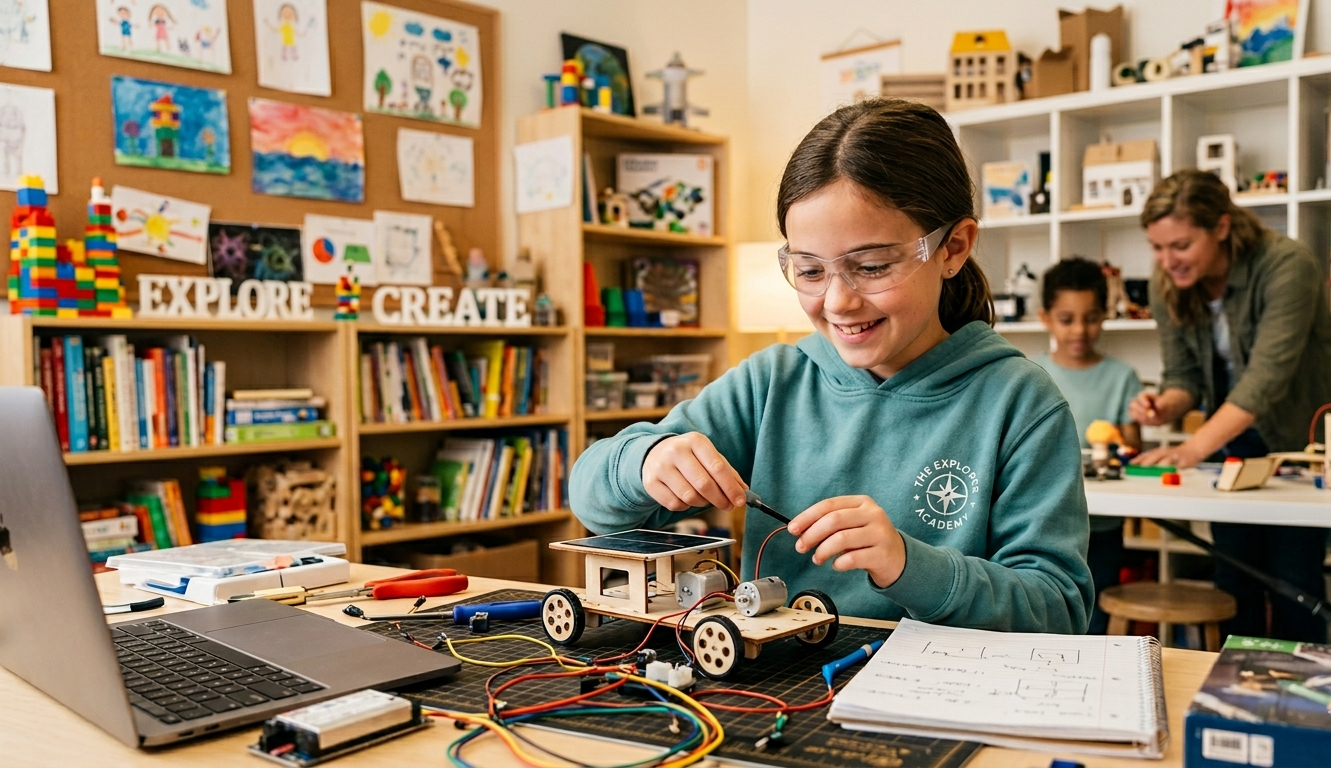
At The Explorer Academy, our Surrey and Delta STEM programs are built around exactly the kind of measurable, meaningful progress covered in this guide, with structured feedback, age-appropriate pacing and hands-on projects that build real independence, not just finished crafts.
Book a trial class with The Explorer Academy today →
See for yourself what progress looks like in the first few sessions, no long-term commitment required.
About The Explorer Academy
Educator and contributor at The Explorer Academy, dedicated to engaging and enrichment-focused learning for kids.