Group Tutoring for Math, Physics & Chemistry: How It Works
Most parents start looking for tutoring at the same moment: a report card that doesn't match the effort, a child who says "I just don't get it" about a subject they used to be fine with or a looming exam that's causing more stress than studying. The instinct is usually to search for "math tutor near me" or "physics tutoring Delta" and book the first available slot.
That instinct isn't wrong but it skips a more useful question: what kind of tutoring actually fits how your child learns and which subject's struggles need which kind of support?
Here you will know everything we teach in our group tutoring programs at The Explorer Academy — Mathematics, Physics and Chemistry across Delta and Surrey. If you are trying to figure out whether group tutoring is right for your child, which subject to start with or what a real session looks like before you commit, this is the place to start.
Why "Group Tutoring" Doesn't Mean What Most Parents Think It Means
When parents hear "group tutoring," they usually picture one of two things: a crowded learning center with a tutor splitting attention across fifteen students or a study hall where kids do homework while someone occasionally checks in. Neither is what we run.
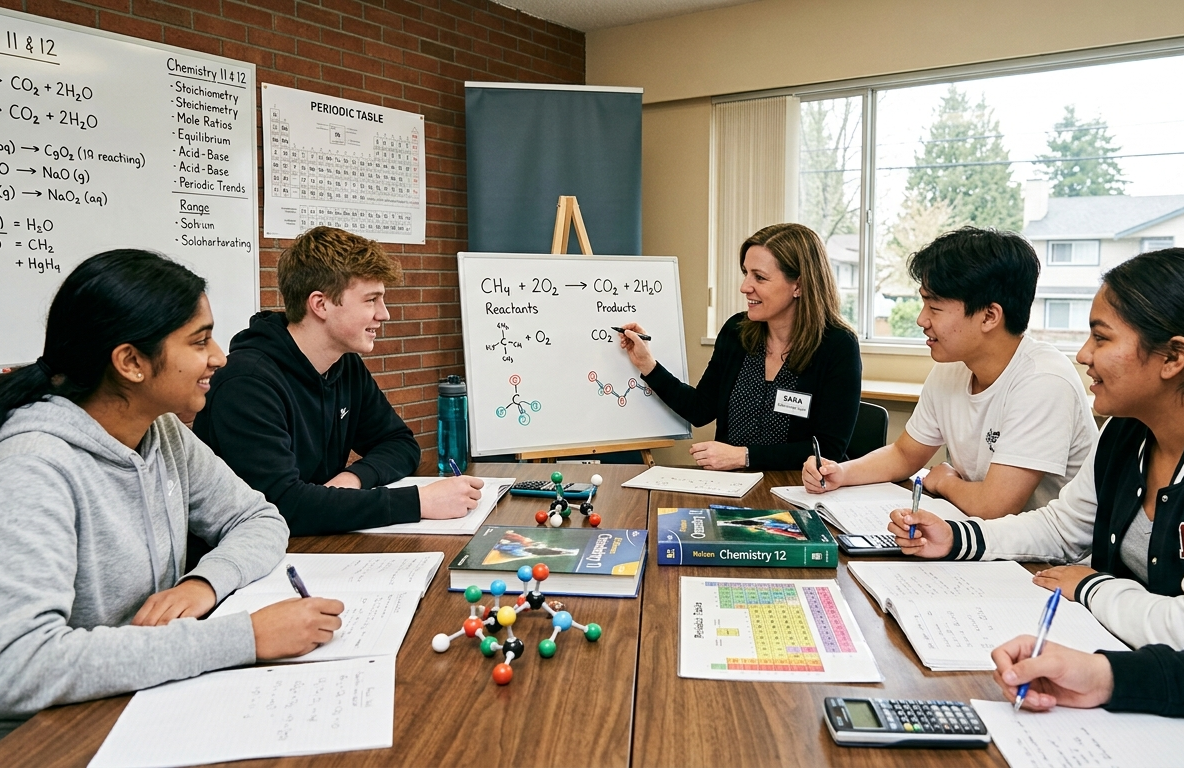
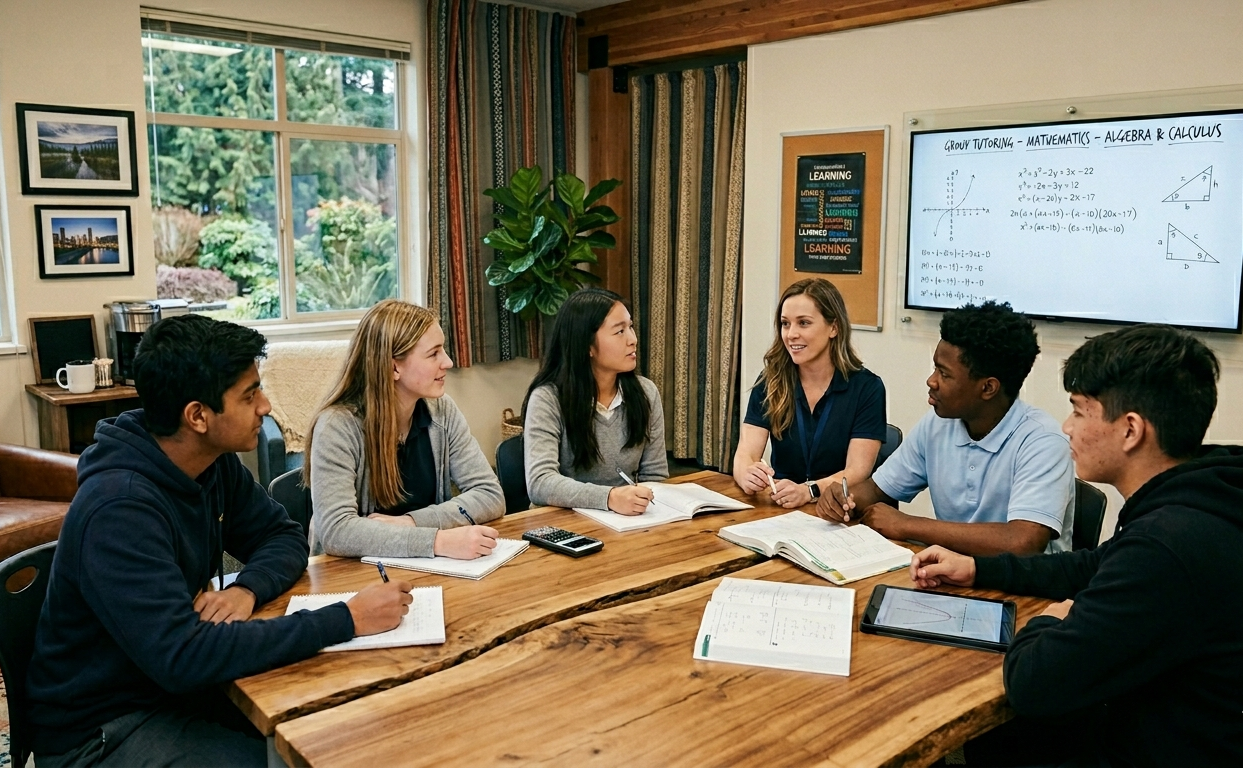
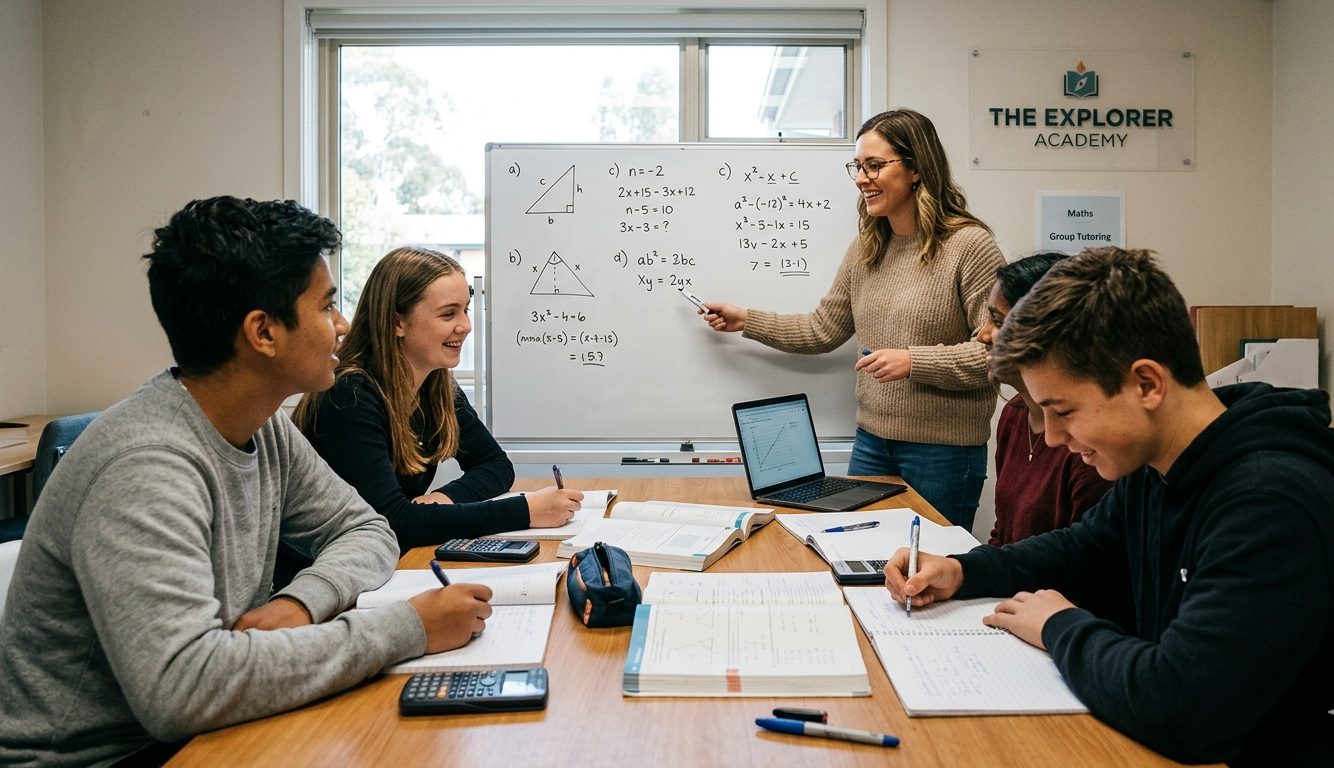
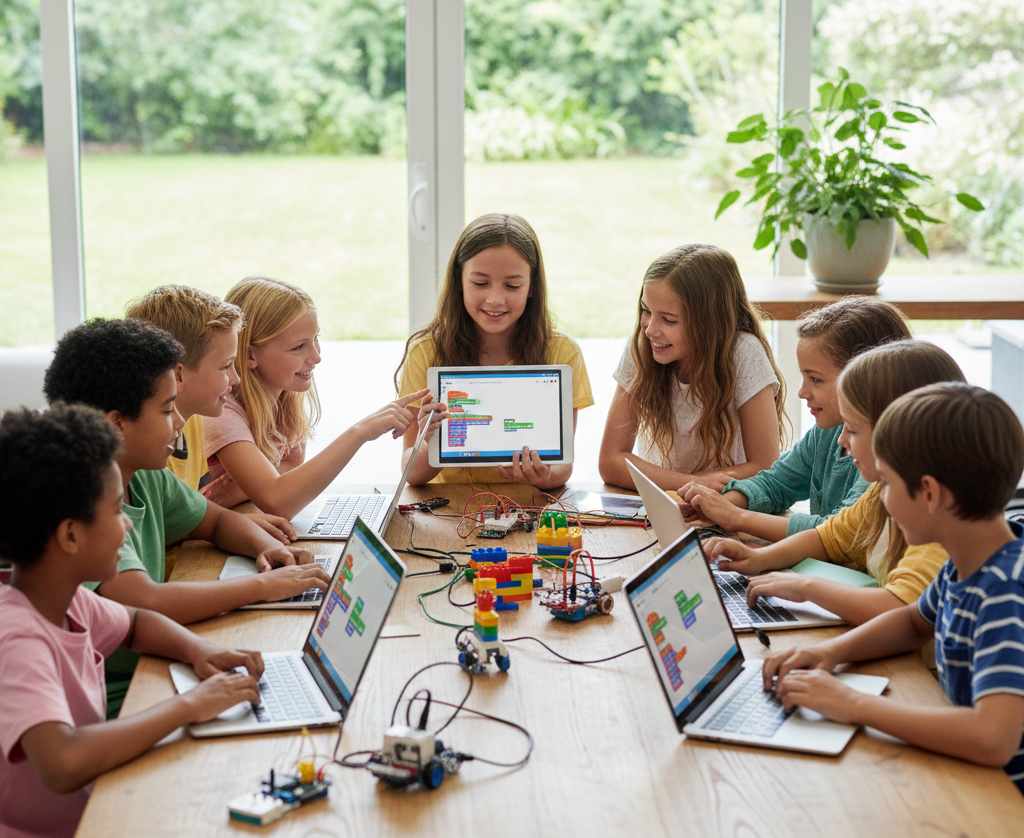
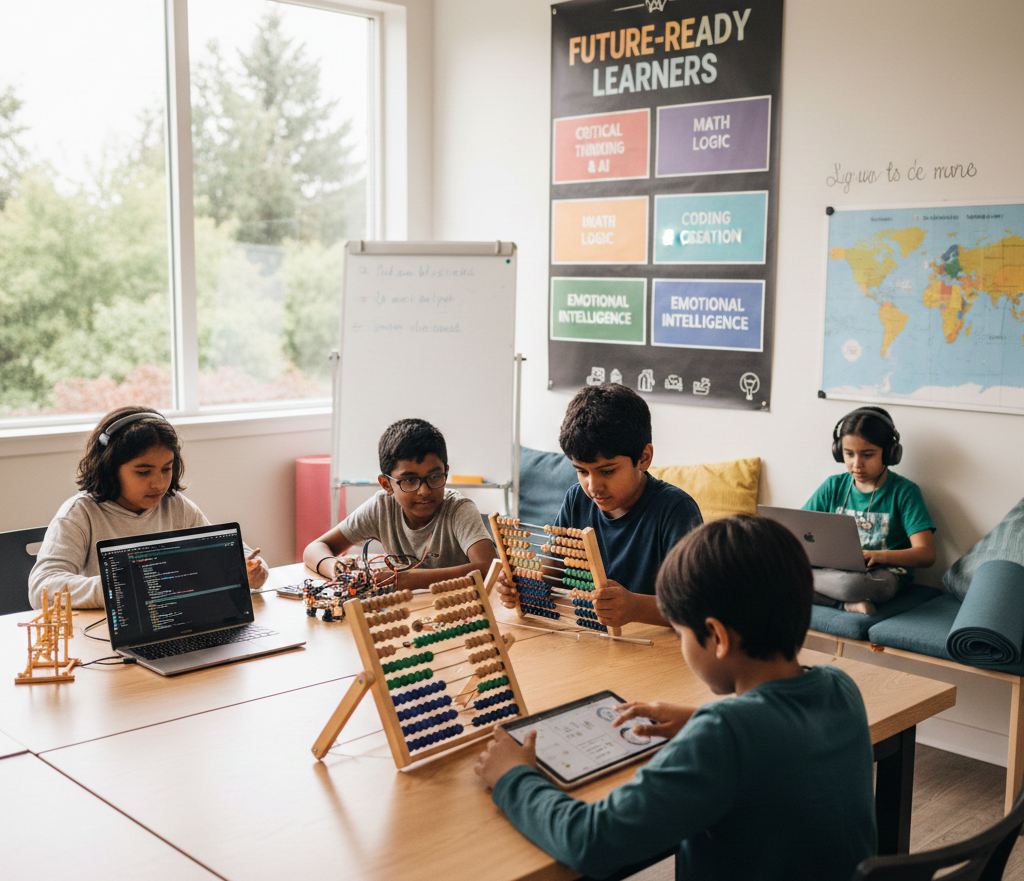
At The Explorer Academy, group tutoring means small, intentionally structured groups - small enough that a tutor can watch how each individual student approaches a problem, catch a misunderstanding in real time and adjust an explanation on the spot. It's a specific middle ground between two extremes:
- One-on-one tutoring gives maximum individual attention but no peer interaction - a student never hears how someone else thinks through the same problem.
- Large classroom or crowded center tutoring gives peer exposure but loses the individualized correction that catches small misunderstandings before they snowball.
Small-group tutoring in Delta is built to get the best of both. Students still get noticed individually - nobody disappears into the back of the room but they also benefit from something private tutoring genuinely can't replicate: hearing how other students think.
The Peer-Learning Advantage Most Parents Underestimate
It's a common assumption that one-on-one tutoring is automatically the better option. In practice, that's not always true and for many students, it's not even the better fit.
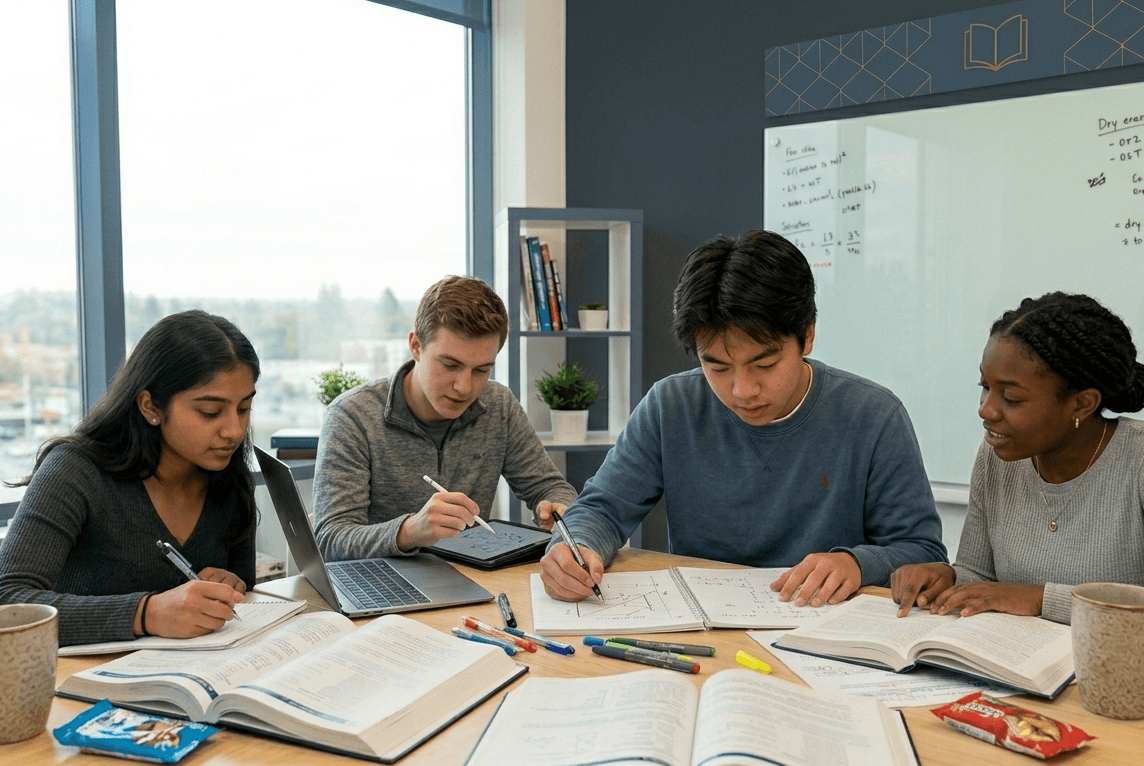
When a student works through a problem alongside classmates, three things happen that don't happen in private sessions:
- They hear different approaches to the same question. Math and science problems almost always have more than one valid path to a solution. A student who only ever sees their own approach (and the tutor's "correct" one) misses out on the flexibility that comes from seeing how a peer tackled it differently.
- They learn to articulate their reasoning out loud. Explaining why you did something, not just what you did is one of the most reliable ways to discover gaps in your own understanding. Group settings create natural opportunities to do this that private sessions don't.
- They build healthy competition that motivates improvement. Not the anxiety-inducing kind - the kind where seeing a classmate work through something difficult makes a student want to keep up, not give up.
There is also a quieter benefit that matters just as much: group tutoring normalizes struggle. A student who has been quietly assuming they are the only one who doesn't get a concept often discovers, the moment a classmate asks the same question, that they weren't behind — they just hadn't asked yet. That alone tends to reduce subject-specific anxiety in ways solo tutoring sometimes can't because there is no one else in the room to compare yourself to (favorably or otherwise).
Why Group Size Is the Real Differentiator — Not "Group vs. Private"
The actual variable that determines whether group tutoring works isn't whether it's a group at all - it's how big the group is and what that means for attention ratio.
In large, crowded learning centers, it's common for a single tutor to be managing fifteen to twenty students across different grades and even different subjects simultaneously. In that setup, "group tutoring" is really just supervised independent work with occasional help closer to a study hall than instruction.
We run our groups intentionally small. Small enough that the tutor can:
- Watch how each student approaches a problem, not just whether they got the right answer
- Correct a mistake in the moment it happens, before it gets reinforced through repeated practice
- Adjust an explanation based on how a specific child is processing the material that day
This matters more in math, physics and chemistry than in almost any other subject area, because these subjects build on themselves sequentially. A small misunderstanding in fractions can resurface two years later as a struggle with algebra. A shaky grasp of vectors in introductory physics becomes a real obstacle once forces and motion get layered on top. A student who never quite locked down mole ratios in chemistry will hit a wall the moment stoichiometry shows up on every subsequent unit. Small-group instruction exists specifically to catch those gaps early, while they are still small.
How a Session Actually Works at The Explorer Academy
Across Math, Physics and Chemistry, our group tutoring follows a consistent structure not because every subject is taught identically but because the rhythm of effective instruction looks similar regardless of subject:
- Sessions run 90 minutes, once a week. Long enough to genuinely work through a concept rather than rush a surface-level review, but structured enough to fit into a regular weekly routine.
- Each session combines concept explanation, guided practice, and live doubt-solving. Students aren't just watching a tutor work through examples - they are applying the concept themselves, in the room, with immediate feedback available.
- Weekly homework comes with feedback, not just a grade. The point of homework in our programs is to surface what didn't fully land in the session, so the following week can address it directly instead of starting from scratch.
- Groups are kept intentionally small, so every student is seen not just the fastest or the loudest.
This consistency is deliberate. Momentum matters more in math and science tutoring than almost any other subject because the cost of "starting over" every session is high, these subjects don't forgive gaps, they compound them.
We Teach Concepts, Not Just Formulas
One of the most common patterns we see in students who've struggled with math, physics or chemistry isn't a lack of effort, it's that they've learned to memorize formulas without understanding why those formulas work. That approach gets a student through routine homework problems, but it falls apart the moment a question is phrased differently than they expect, which is exactly what happens on tests and exams.
The Explorer Academy programs are built to shift the focus from memorization toward conceptual understanding and pattern recognition. The kind of analytical thinking that doesn't just improve grades in one subject but transfers across all three (and beyond, into anything else that requires structured problem-solving).
Understanding How Your Child Learns Before Choosing a Program
Not every student struggles with math, physics or chemistry for the same reason and not every student learns best the same way. Before enrolling in any group tutoring program, it helps to understand which pattern your child tends toward:
- Visual learners grasp concepts faster when they can see them — diagrams, graphs, number lines, free-body diagrams, molecular structures, coordinate geometry mapped out rather than just described.
- Logical-sequential learners prefer breaking a problem into clear, repeatable steps and following the same method consistently every time.
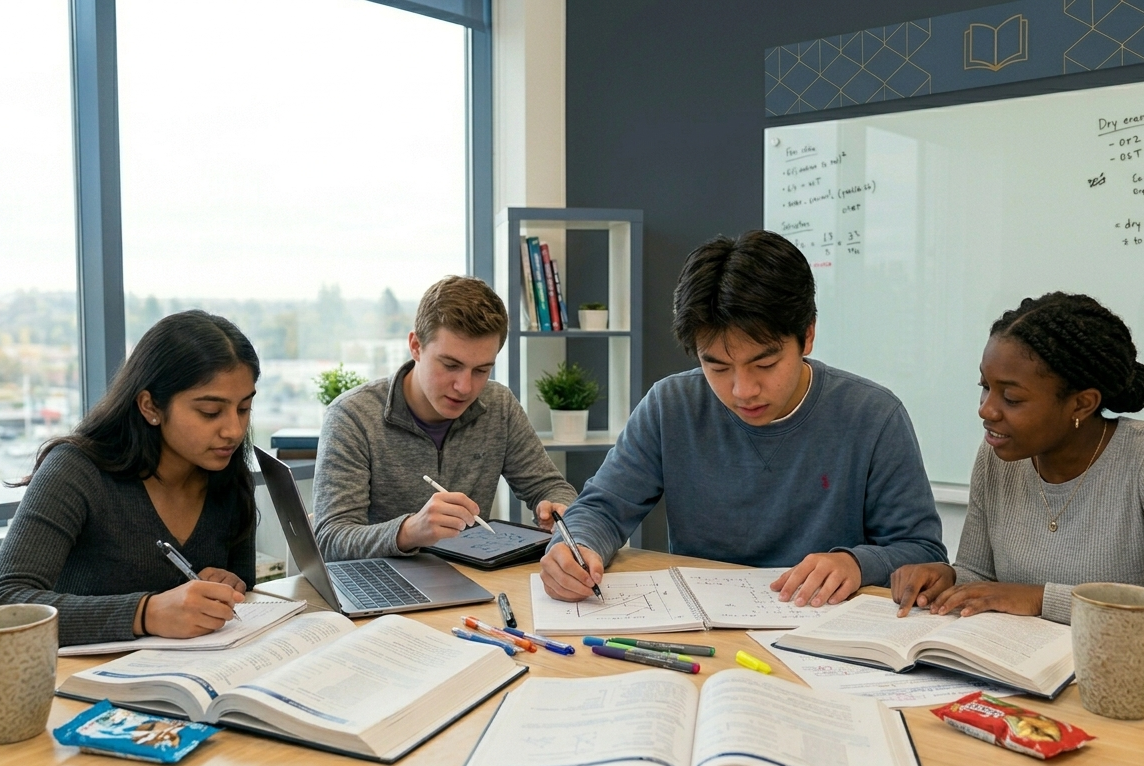
- Discussion-based learners absorb material best when they can talk through their reasoning out loud with peers and a tutor in real time which is exactly the format group tutoring is built around.
- Practice-driven learners need repetition and guided homework to make a concept stick long-term, rather than understanding it once and assuming it's retained.
A strong tutoring program doesn't force every student into a single teaching style. It blends multiple approaches within each session, so that no matter which way your child learns best, there is a moment in the lesson built for them. This is also why the same program structure works across Math, Physics and Chemistry. The subject content differs but the need to teach toward different learning styles within a single group doesn't.
Math, Physics or Chemistry: Where Should You Start?
If your child is struggling in more than one subject, it's worth understanding what tends to drive difficulty in each because the underlying problem (and the fix) often looks different.
Mathematics struggles are most often the result of a gap further back in the sequence than the current unit. A student who's shaky on fractions will struggle with ratios; shaky on ratios will struggle with algebra; shaky on algebra will struggle with nearly everything after it. Math tutoring in Delta is most effective when it identifies where the chain actually broke, not just what unit is being tested this week.
Chemistry struggles tend to cluster around abstraction: chemistry asks students to reason about things they can't see (atoms, bonds, moles, equilibrium) using both conceptual logic and precise quantitative calculation at the same time. A student can understand the concept narratively but still get the stoichiometry wrong, or vice versa. Chemistry tutoring in Surrey or Delta needs to address both halves, not just one.
Physics struggles often come from a different source: physics requires translating a real-world scenario into a mathematical model (a free-body diagram, a set of vectors, an equation) before you can even start solving it — and that translation step is where most students get stuck, even when their underlying math skills are fine. Physics tutoring that only drills formulas misses this; physics group tutoring in Delta that teaches the translation step solves it.
If you are not sure which of these best describes your child's experience, that's a completely reasonable thing to bring to a first conversation — a good tutoring program should be able to help you figure that out, not expect you to diagnose it yourself before you walk in.
What to Ask Before Choosing Any Tutoring Program
Whether you are looking at our programs or comparing options, these are the questions worth asking any tutoring provider before committing:
- What is the maximum group size per session? Smaller numbers mean more individualized correction, even within a group format.
- How is the curriculum aligned with my child's current school syllabus? Tutoring that runs parallel to (or behind) what's being taught in class is far less useful than tutoring that reinforces it directly.
- How are students grouped — by age, grade or skill level? This affects pacing and whether your child will be challenged appropriately or left behind/bored.
- What does a typical session actually look like? Ask for the structure, not just the subject list.
- How is progress tracked and communicated to parents? You shouldn't have to guess whether tutoring is working.
- Is there flexibility to switch groups if the pace doesn't fit? Learning needs change; a rigid program can't adapt to that.
A program that can answer all of these clearly, with a structured curriculum and a transparent session format, is far more likely to deliver measurable improvement than one that leans on generic promises about "better grades and more confidence."
The Explorer Academy's Group Tutoring Programs
Each program below follows the same small-group, concept-first approach described in this guide, adapted to its subject:
- Mathematics Group Tutoring — Building conceptual foundations and analytical reasoning skills, from core curriculum support to exam strategy.
- Physics Group Tutoring — Translating real-world physics problems into solvable models, with guided practice and live doubt-solving.
- Chemistry Group Tutoring — Connecting abstract chemical concepts to the calculations they depend on, so neither side of the subject gets left behind.
If your child needs more than homework help — if they need a program that builds real understanding, sharpens reasoning and prepares them for exams with both strategy and confidence that's exactly what these programs are designed for. Book a free consultation and we will help you figure out which program and which starting point makes sense for your child.
About The Explorer Academy
Educator and contributor at The Explorer Academy, dedicated to engaging and enrichment-focused learning for kids.