STEM by Subject: Integration Examples That Actually Make Kids "Get It"
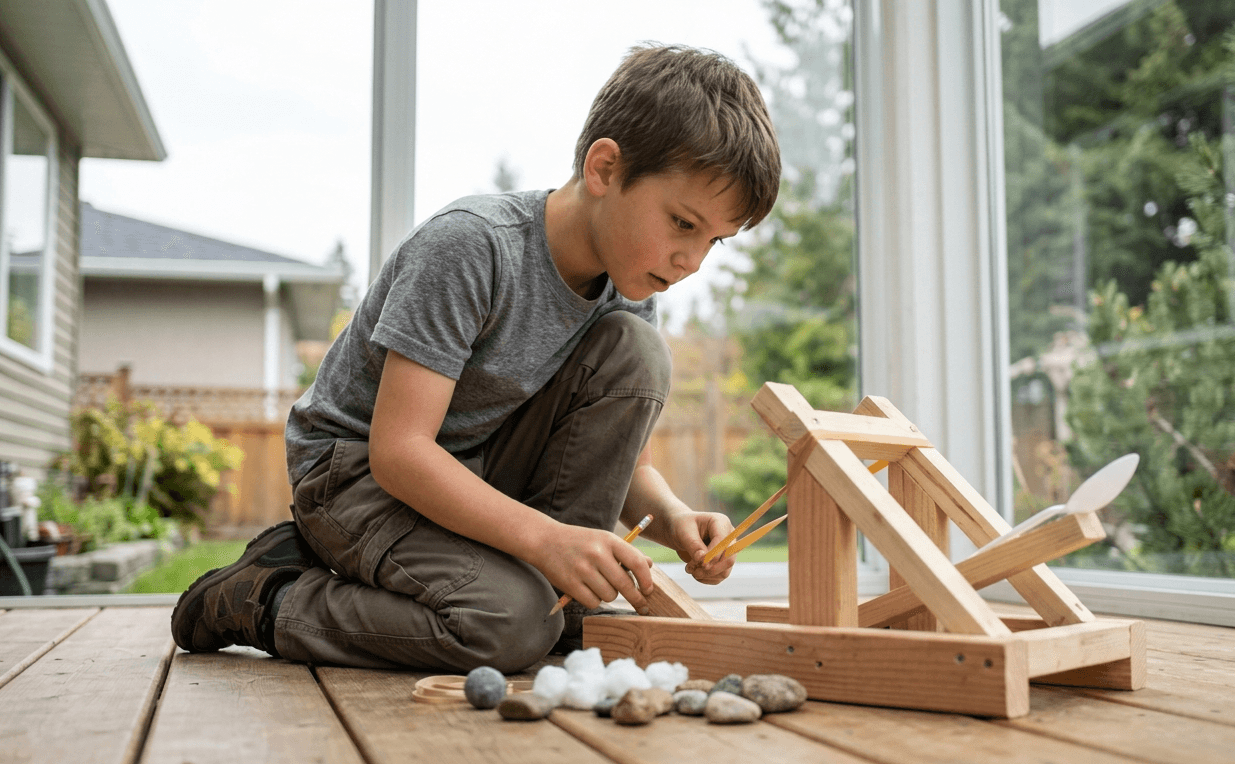
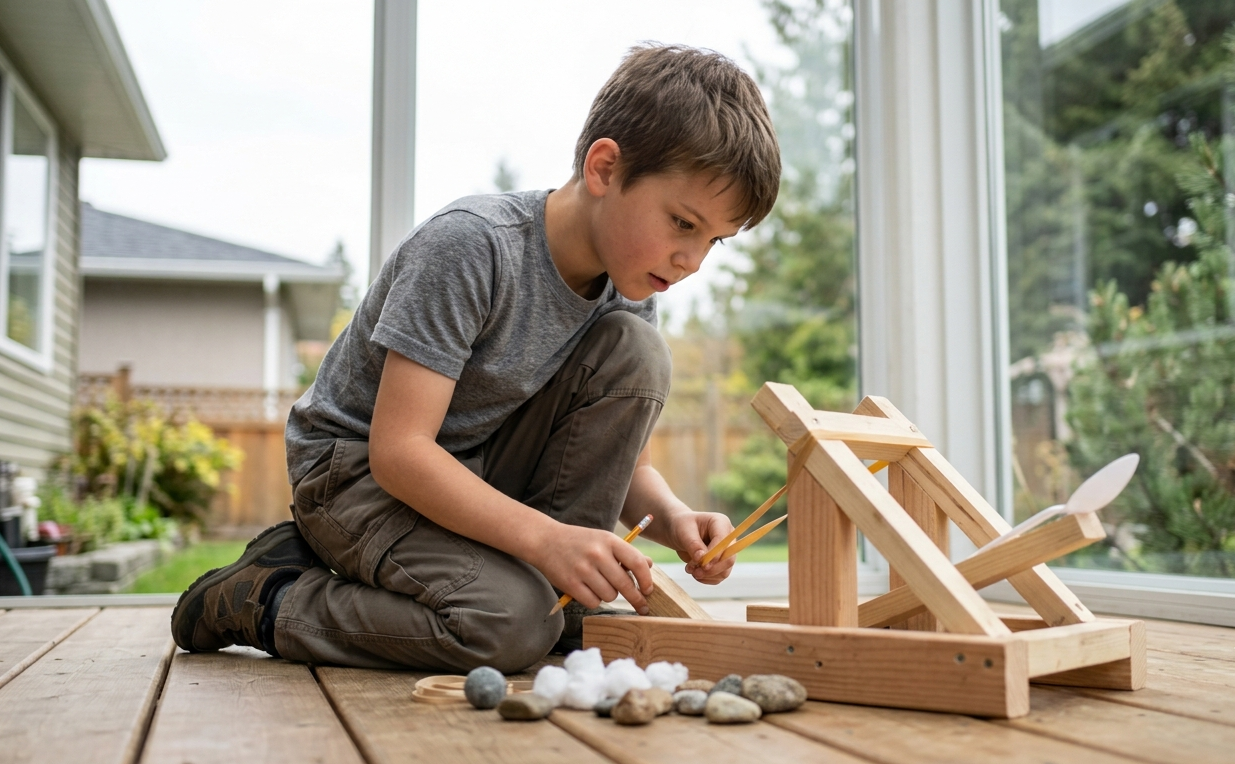
Your child comes home from school, tosses their backpack on the floor and when you ask "how was science today?" you get a shrug and a "fine, I guess." Now picture the same child, an hour into building a working catapult, arguing with a friend about whether adding more weight will make it launch farther and testing it themselves to find out. Same subject. Completely different kid.
That difference isn't luck, and it isn't about finding a "gifted" child. It's about how the subject is taught. Once you see it, you start noticing it everywhere in the questions your child asks at the dinner table, in what they choose to build with their free time, in how long they can actually focus once something interests them.
This is what we mean by STEM integration and it's the natural next step from our guide on hands-on STEM vs. classroom learning. That post explained why hands-on learning sticks. This one shows you what it actually looks like, subject by subject, so you know exactly what to look for the next time you're comparing programs.
It's also the question we hear most from parents in Surrey and Delta during a trial class: "My child does fine in math, fine in science - so why does STEM feel different?"
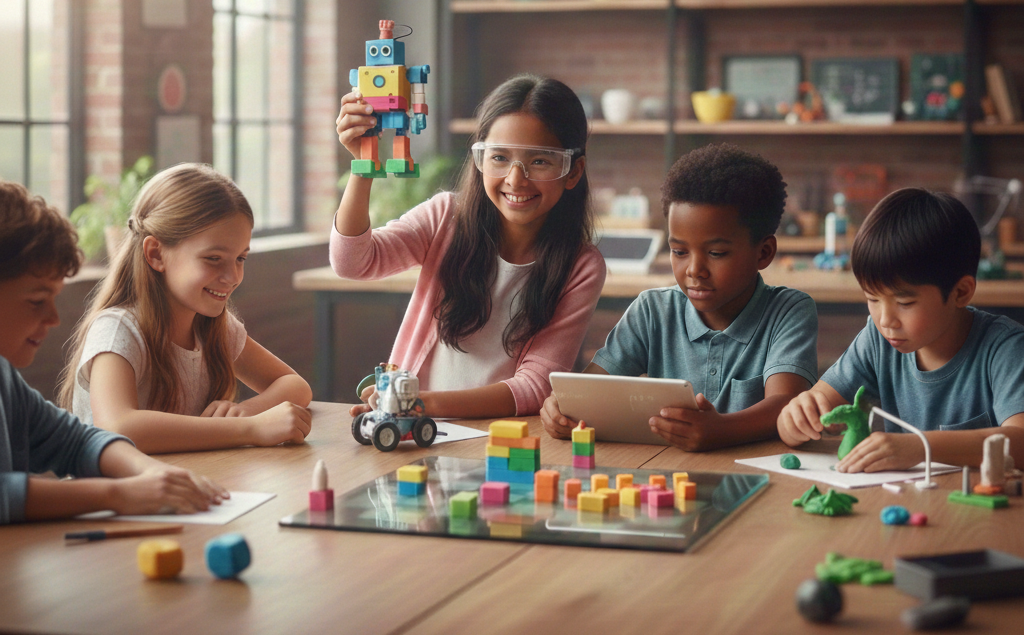
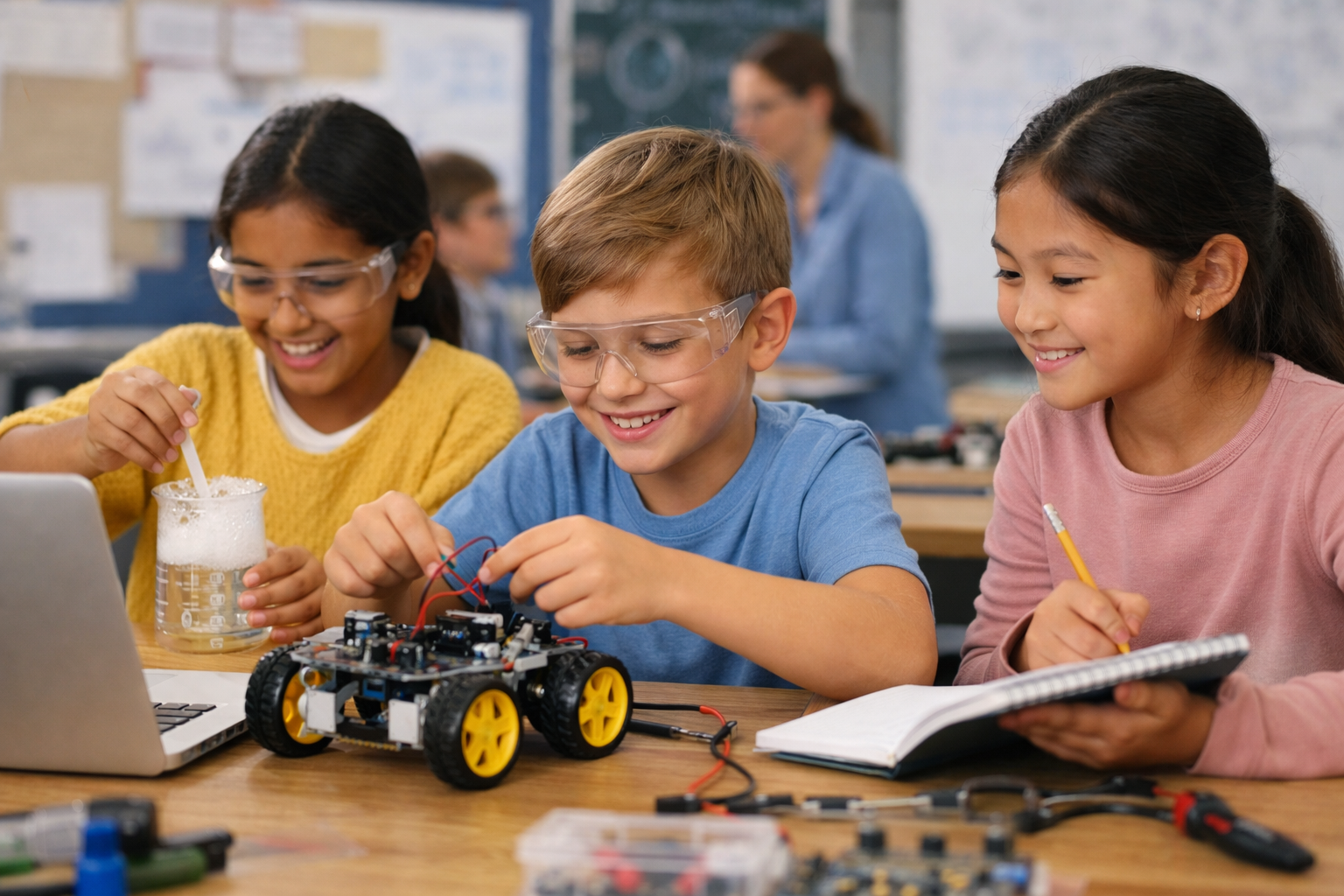
The answer is integration. STEM isn't four separate subjects sitting next to each other; it's science, technology, engineering, and math working together on one real problem. When a child builds a working model, they are not doing "an engineering activity", they are using math to measure, science to understand why something moves, technology to test it and engineering to improve it. That overlap is where real understanding happens.
Below are concrete integration examples for each subject area, the kind of activities we run inside our STEM Exploration program for kids in Surrey and Delta.
What Is STEM Integration?
STEM integration is a teaching approach where a single hands-on activity draws on science, technology, engineering and math at the same time, instead of teaching each subject separately. Rather than a science class covering only science and a math class covering only math, one project like building a bridge pulls from all four areas naturally:
- Science — understanding forces, load, and gravity
- Technology — using simple tools or software to model the design
- Engineering — designing, testing and rebuilding when it fails
- Math — measuring lengths, calculating angles, comparing weight distribution
That single project touches all four areas without forcing it and it's the core idea behind every well-run STEM enrichment class in Surrey and Delta.
Science Integration Examples for Kids
Science-led STEM activities start with a "why does this happen" question and let kids find the answer through experiments rather than being told outright.
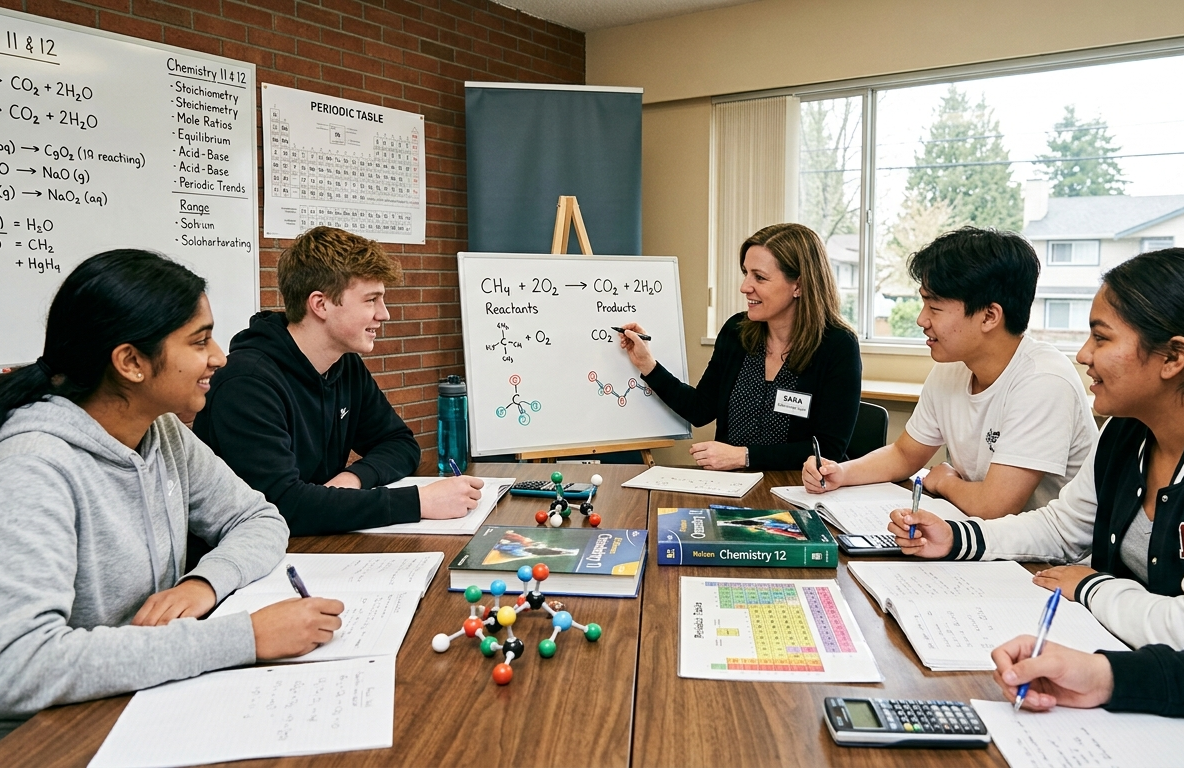
- Chemistry meets engineering: Kids build a simple volcano or reaction chamber, then re-engineer it to change the height or speed of the reaction turning a one-time experiment into a design challenge.
- Physics meets math: Building a catapult or ramp and measuring launch distance introduces basic physics (force, friction) alongside real measurement and data recording.
- Biology meets technology: Younger kids track plant growth using simple data logs or apps, connecting biology observations with early data literacy.
Technology Integration Examples for Kids
In a well-designed STEM program, technology is introduced as a tool for solving a problem, not just screen time.
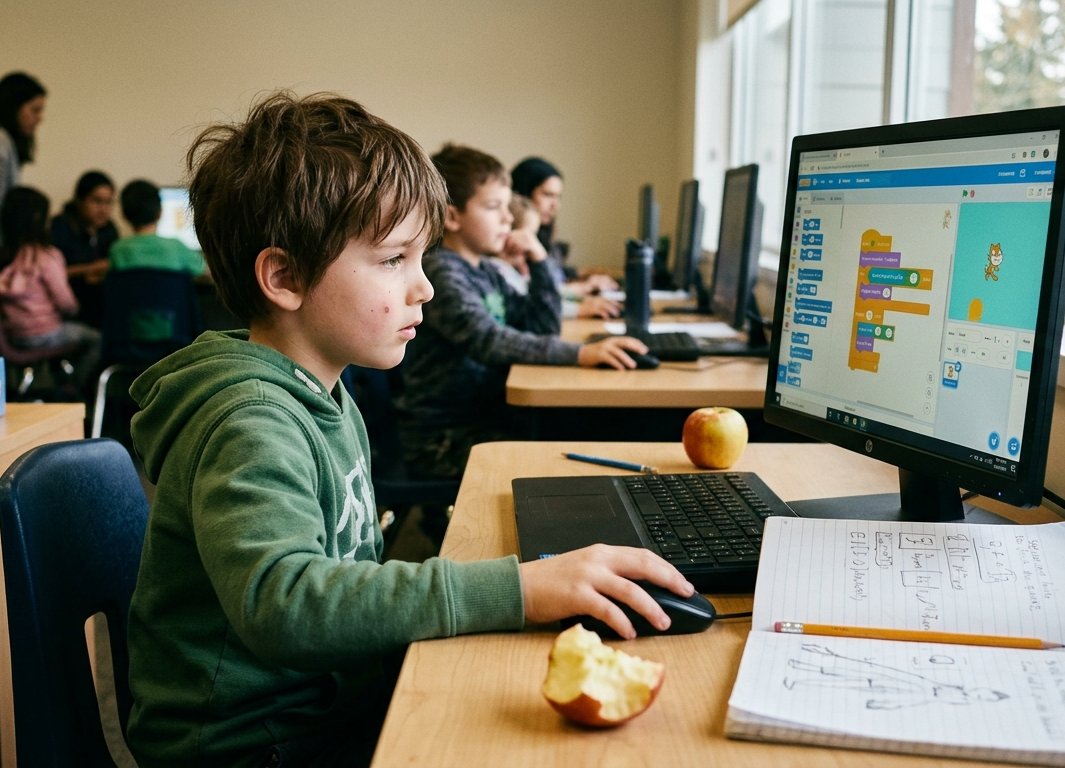
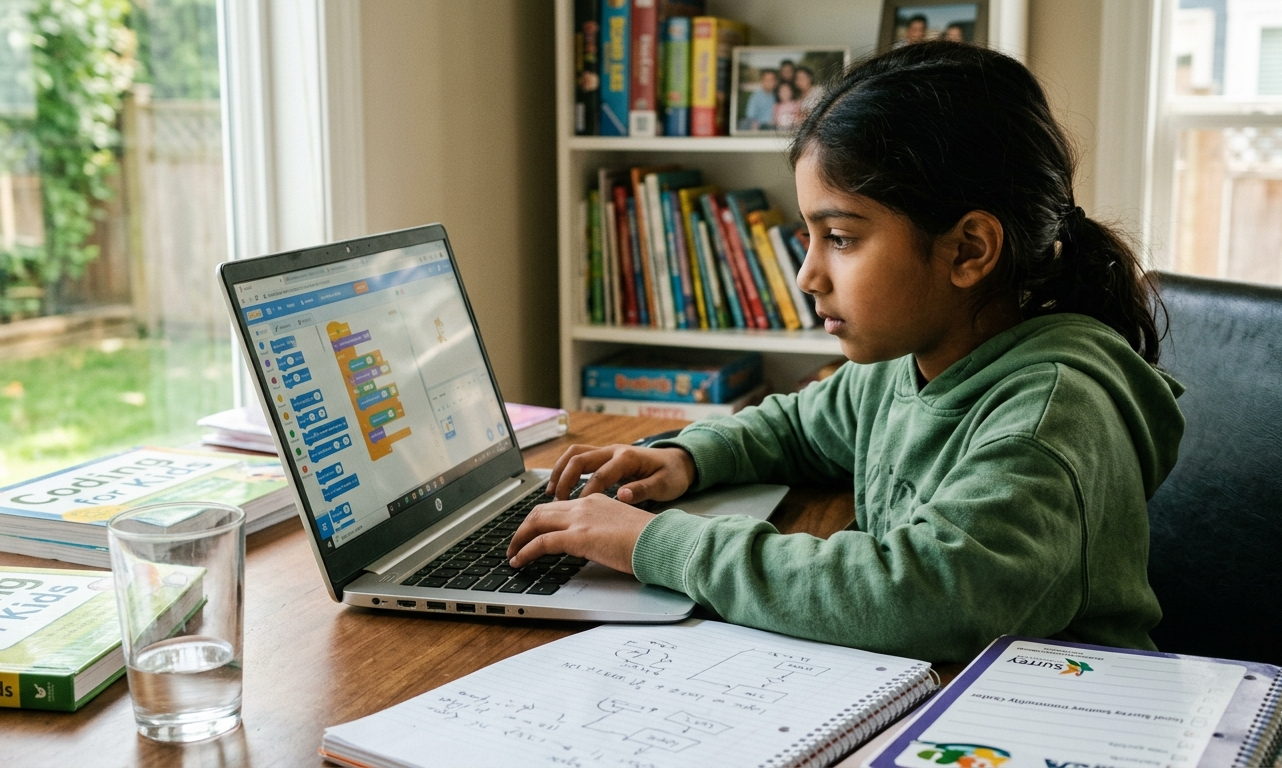
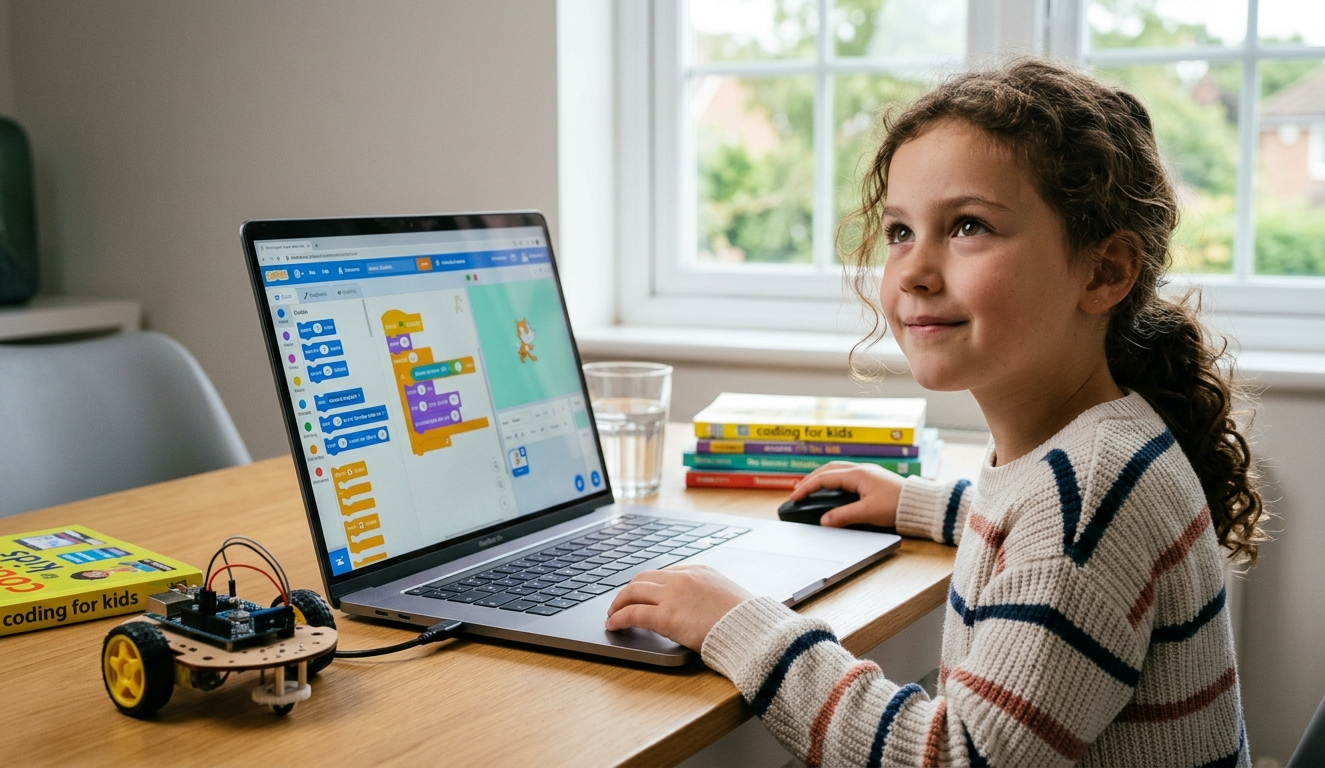
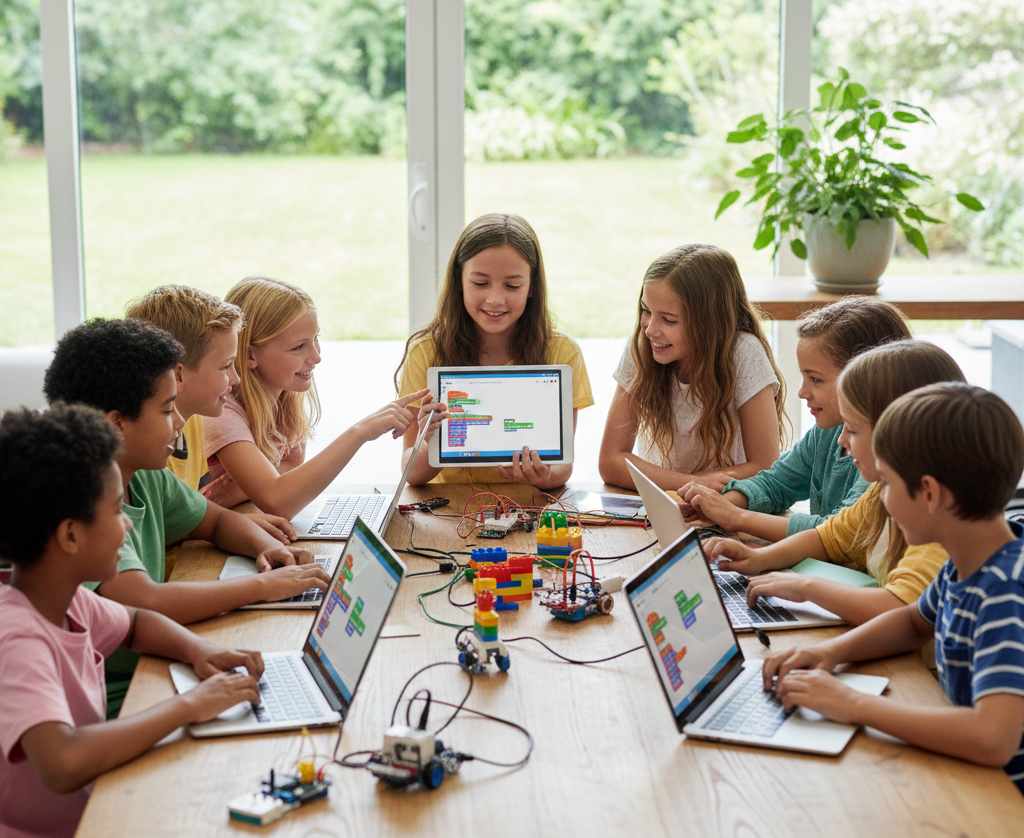
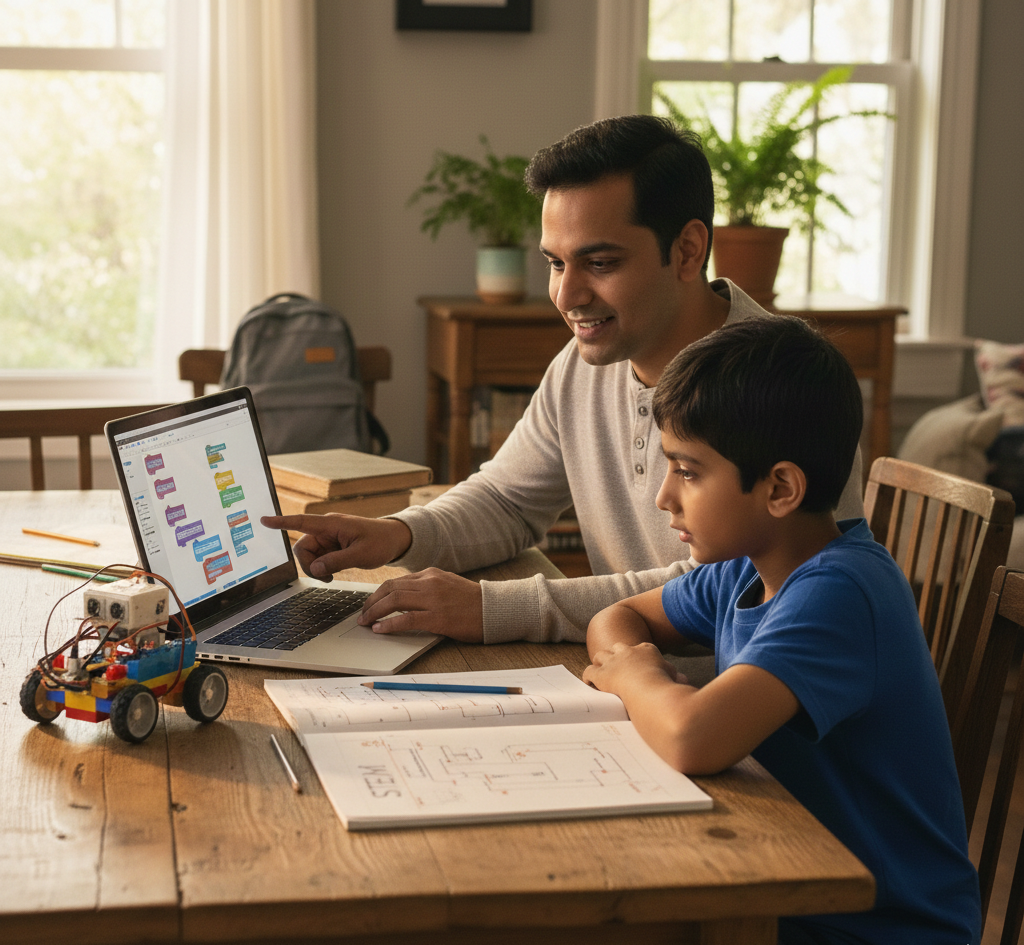
- Coding meets math: Block-based platforms like Scratch or Blockly teach loops and sequences which directly reinforces number patterns and logical thinking.
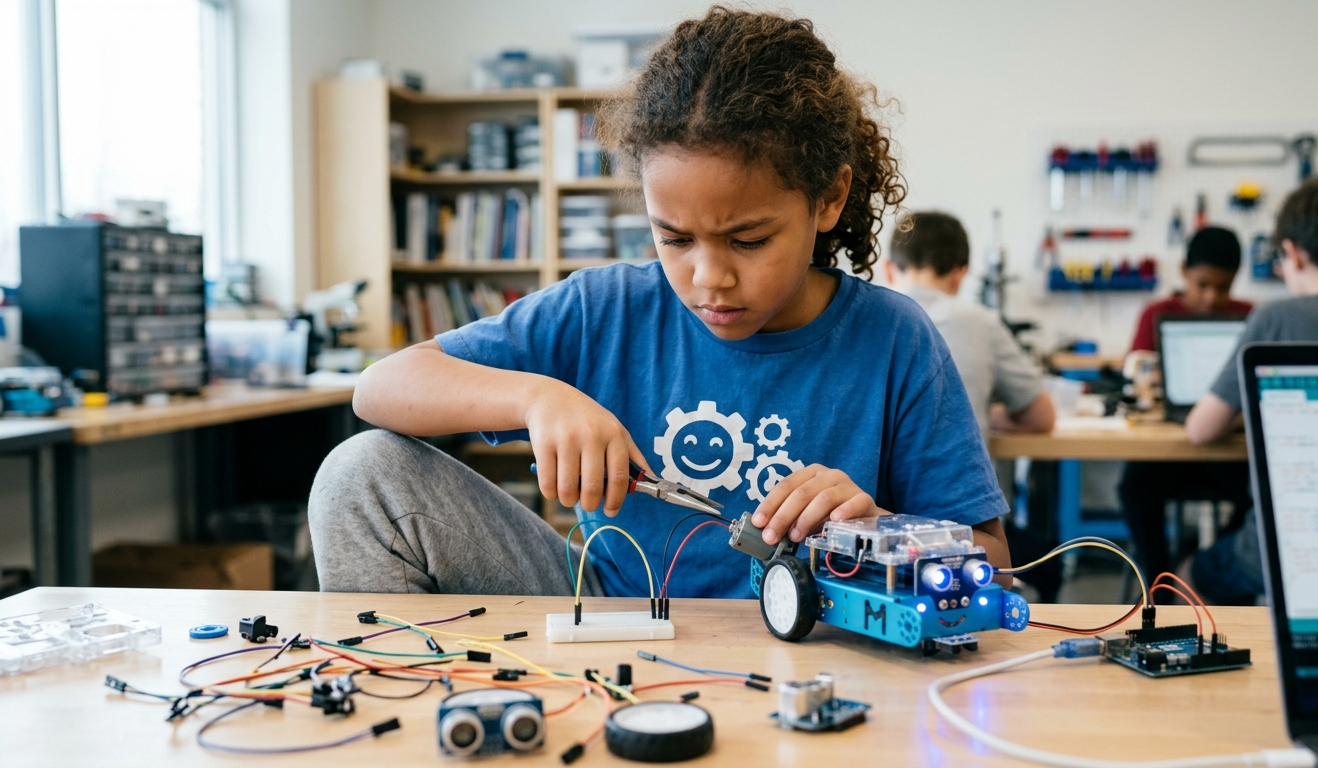
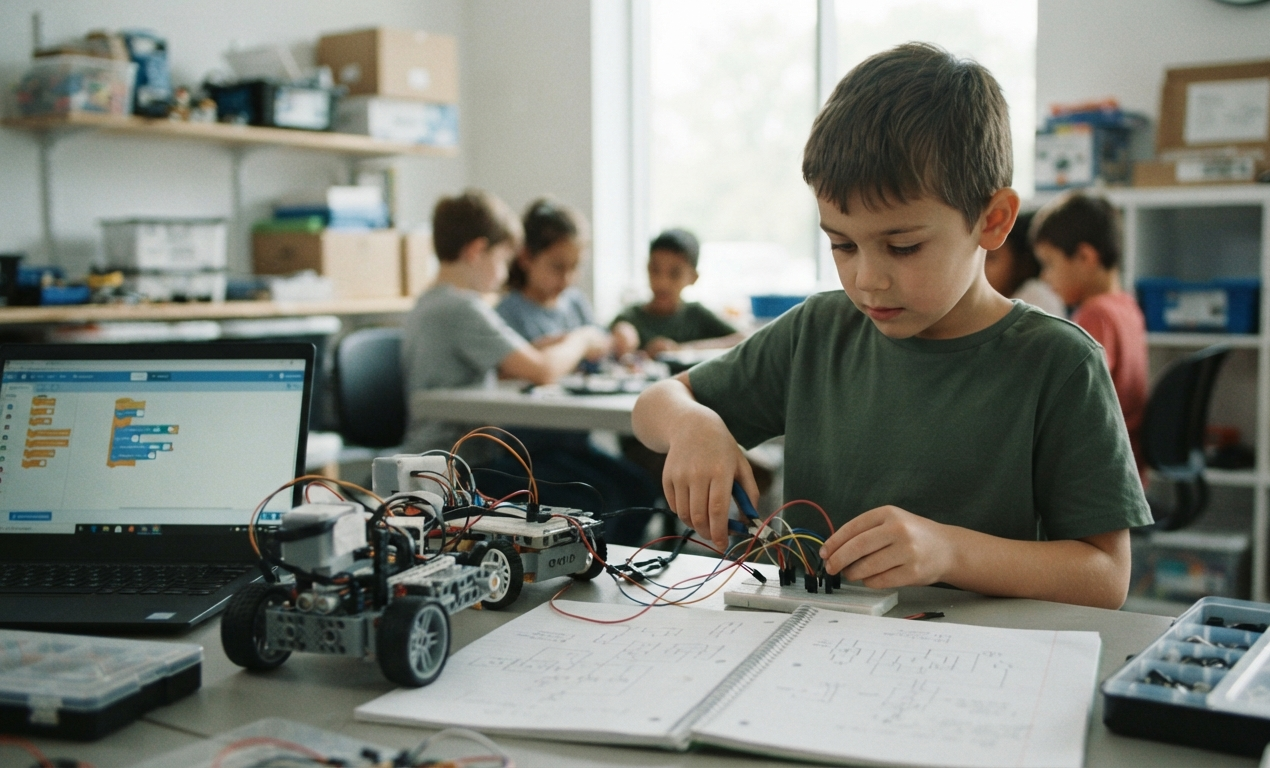
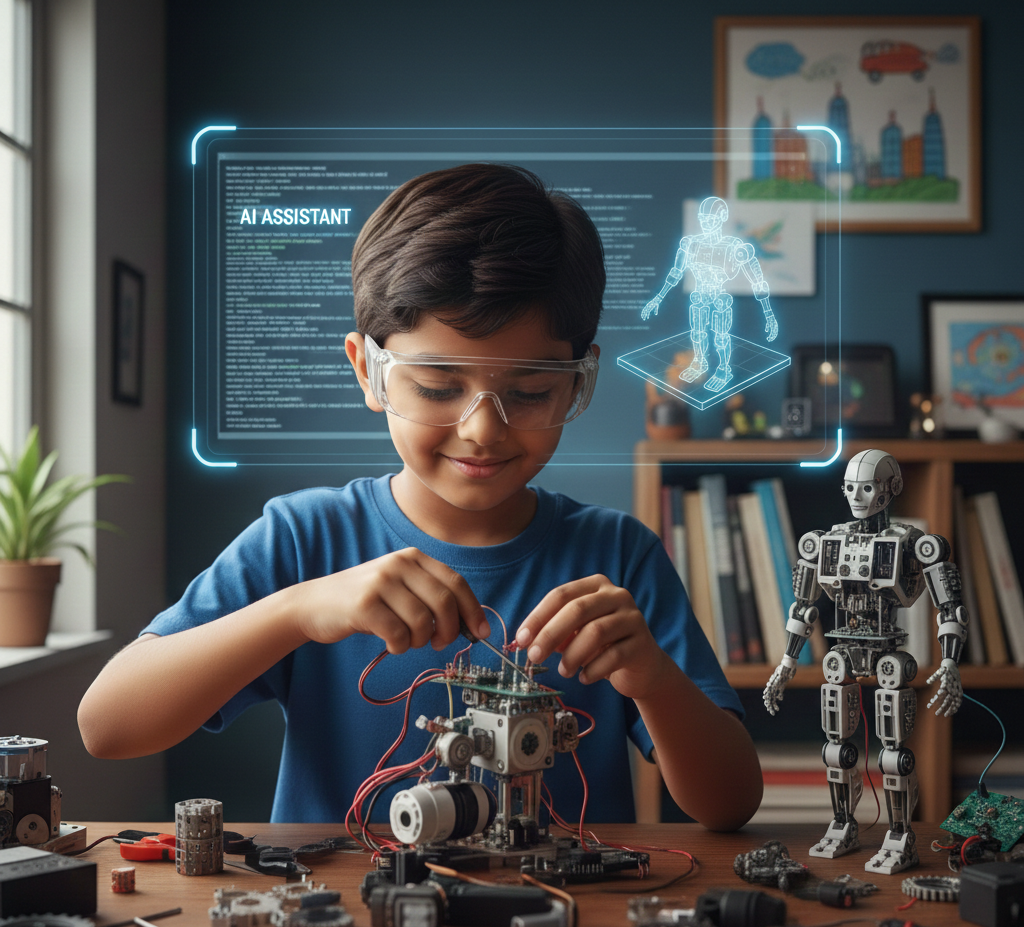
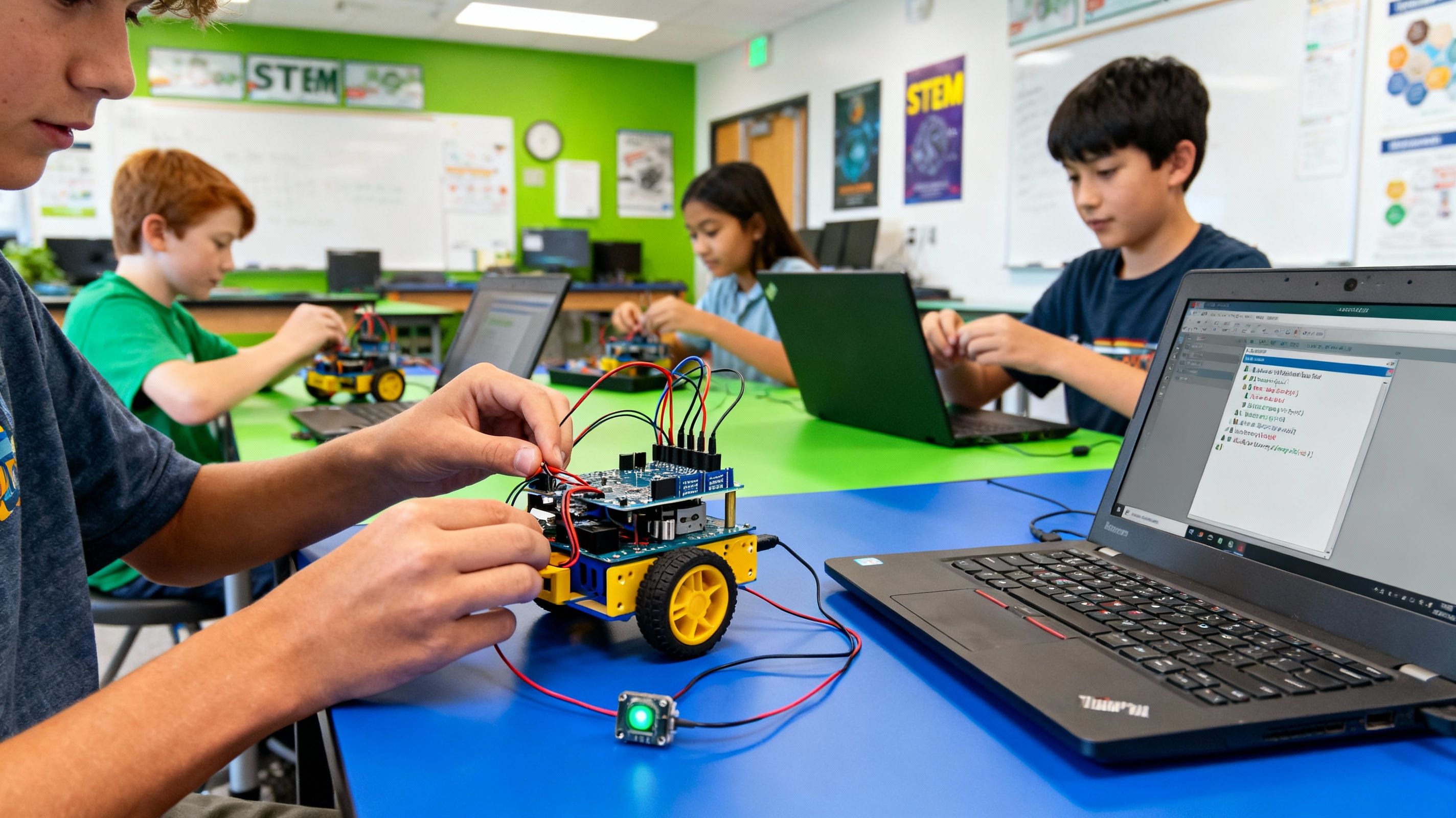
- Robotics meets engineering: Programming a simple robot to navigate a maze combines coding logic with the physical engineering of wheels, sensors and structure.
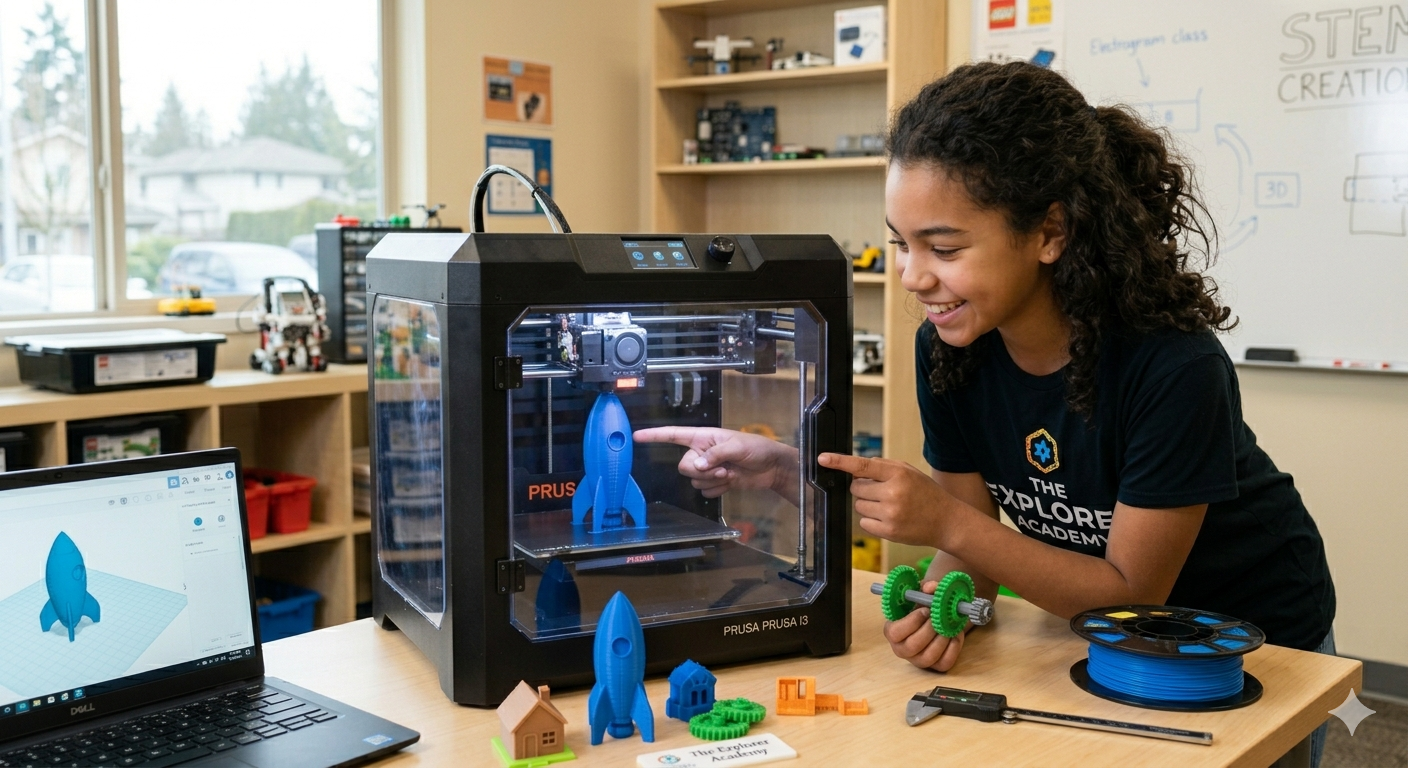
- Digital design meets science: Kids use basic design software to sketch an invention before building the physical version, connecting digital tools to real-world problem-solving.
Engineering Integration Examples for Kids
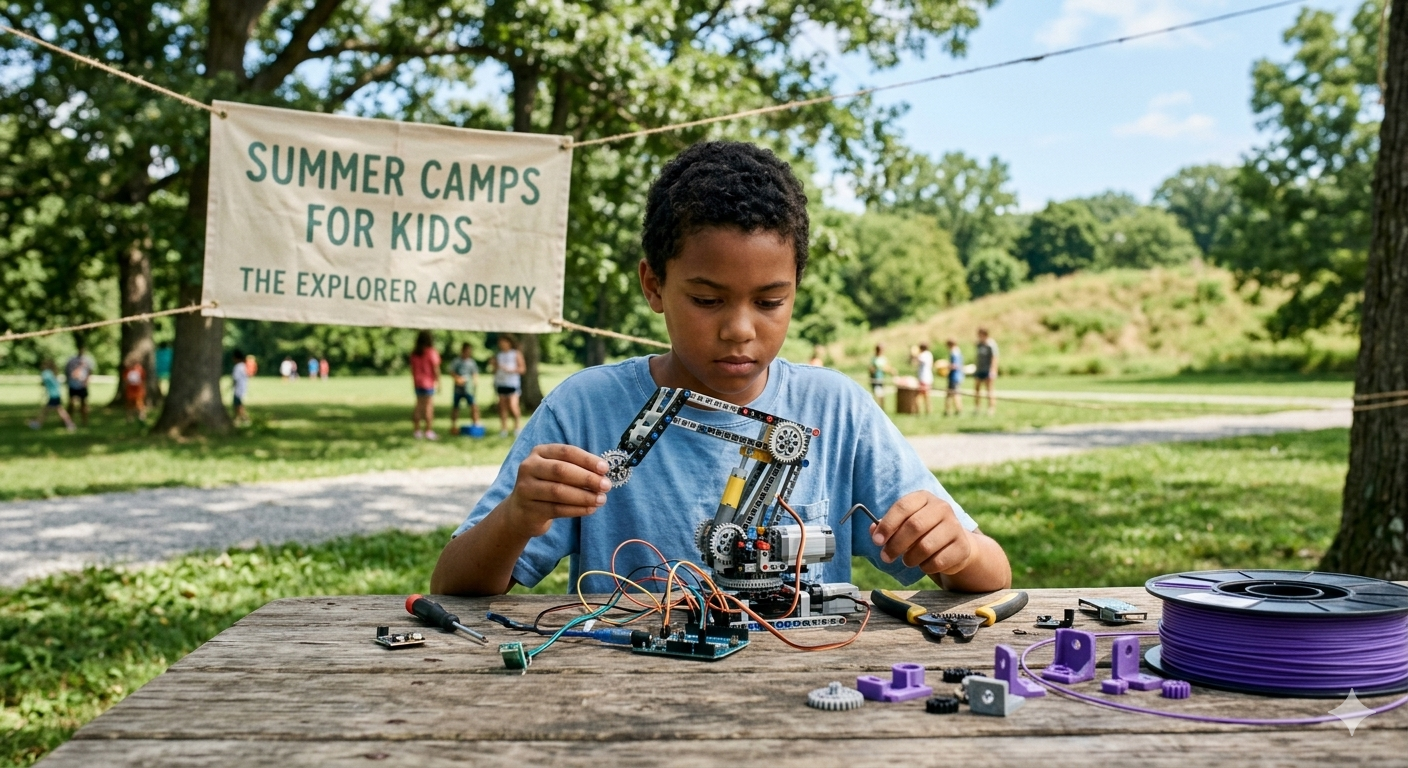
Engineering is usually the most visibly hands-on part of a STEM class which is often why kids get most excited here, they see results immediately.
- Simple machines meet math: Building pulleys or levers out of everyday materials teaches mechanical advantage while requiring kids to measure and compare.
- Structural design meets science: Tower-building challenges (spaghetti, tape or blocks) test concepts like stability and center of gravity through trial and error.
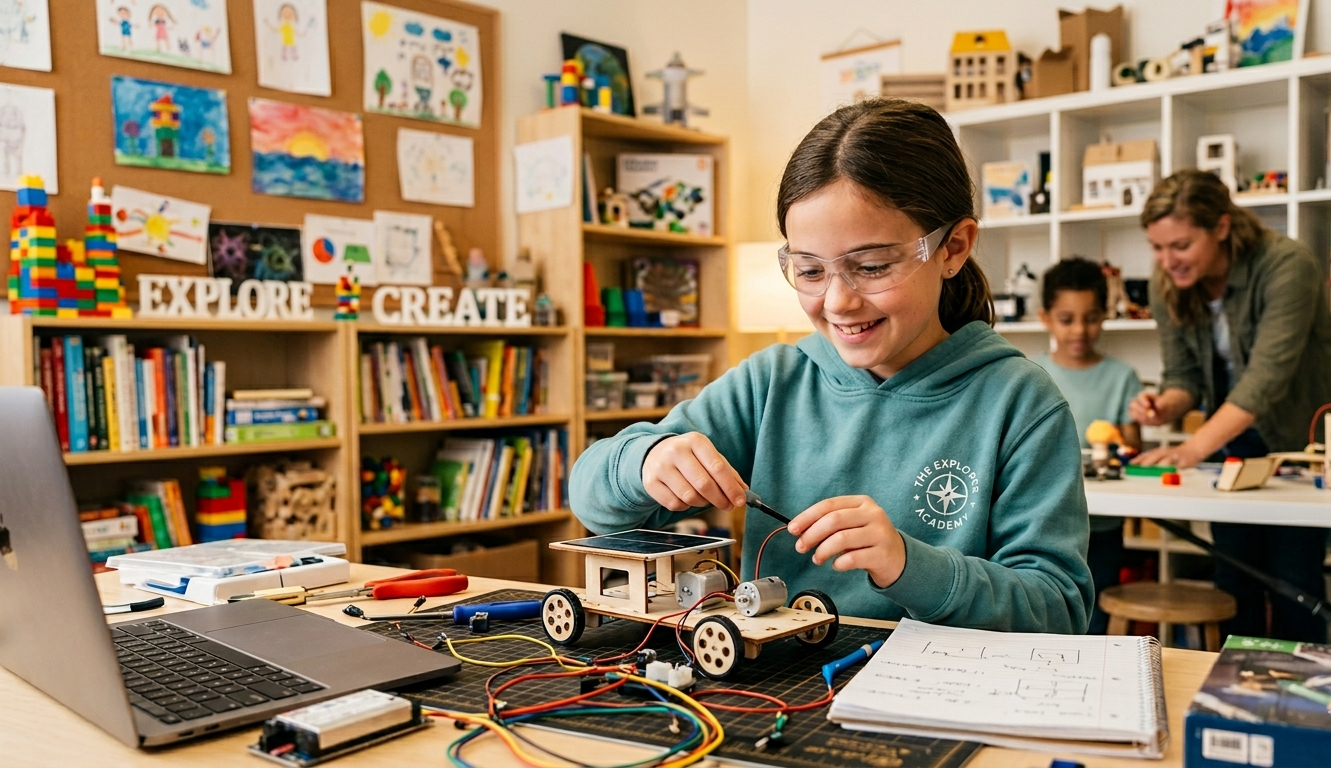
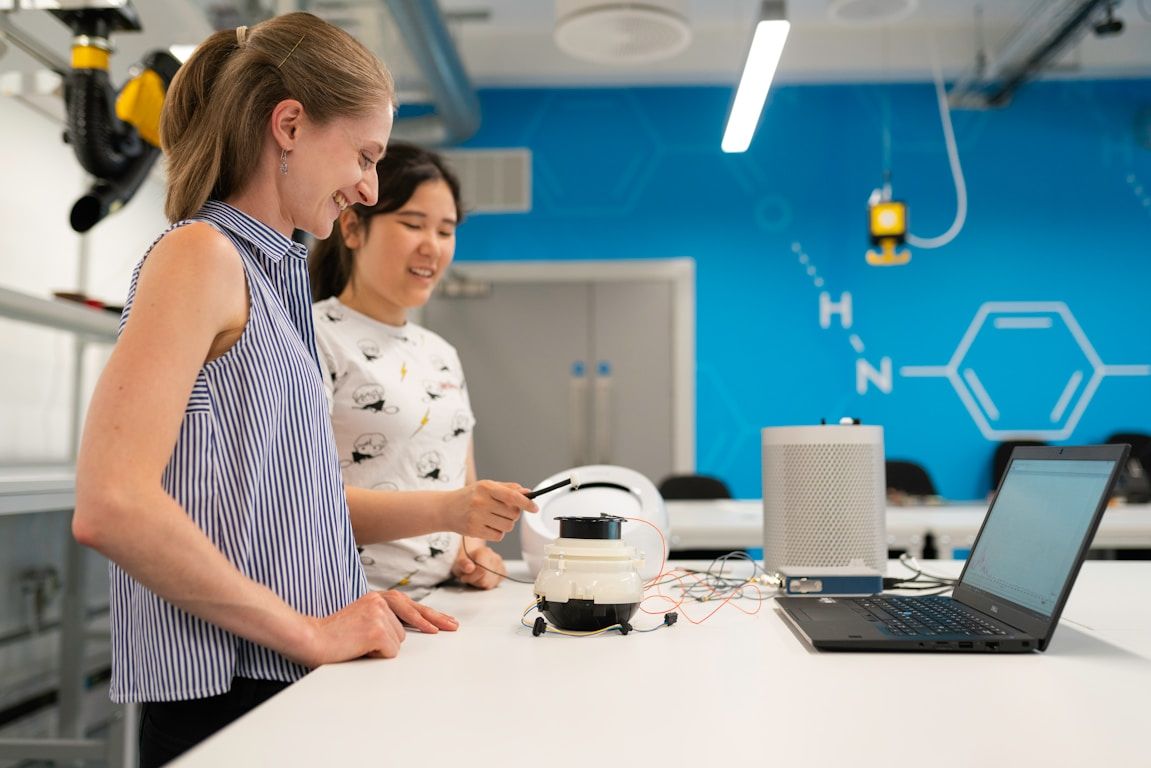
- Circuit building meets technology: Kid-safe circuit kits introduce both engineering (assembly) and technology (how electricity powers a device).
Math Integration Examples for Kids
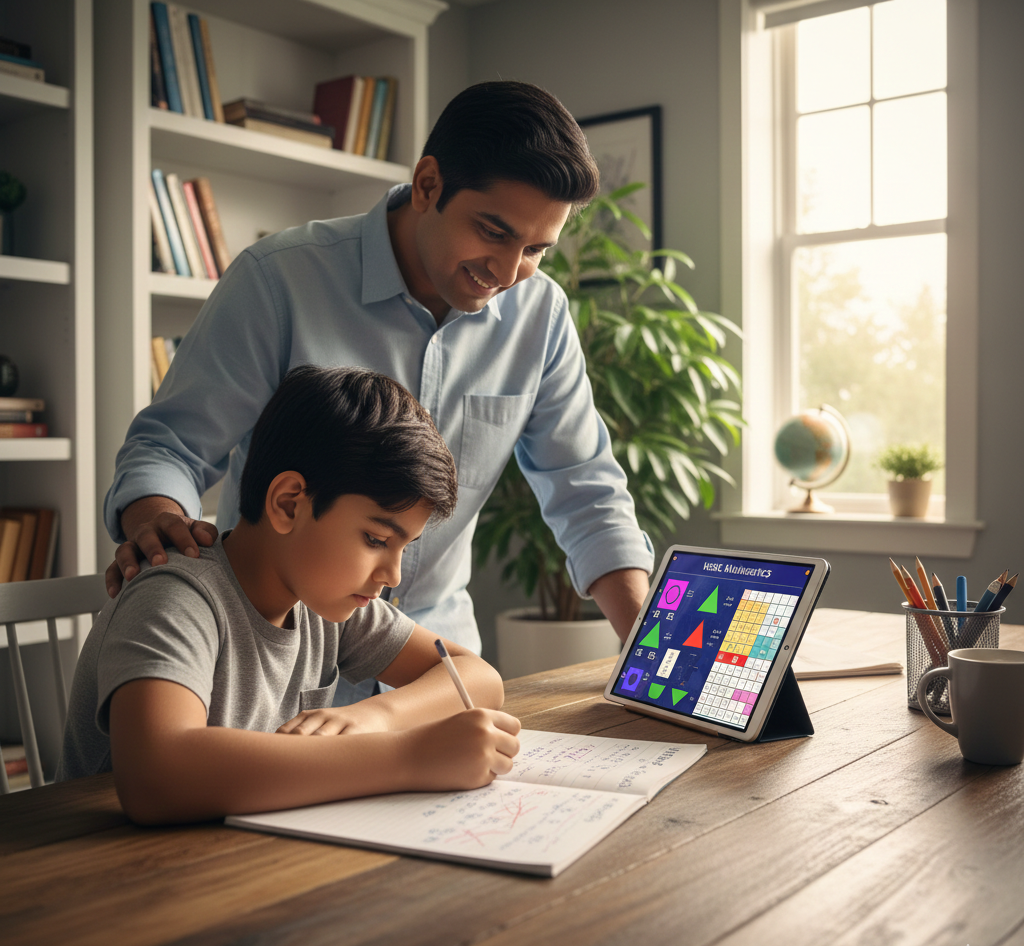
Math is often the subject kids enjoy least on its own but embedded inside a hands-on project, it becomes a tool they actually want to use.
- Geometry meets engineering: Designing a stable structure requires understanding shapes, angles and symmetry in a way a worksheet rarely achieves.
- Measurement meets science: Recording temperature, distance or time during an experiment turns raw numbers into meaningful data.
- Patterns meet technology: Coding sequences and loops reinforce number patterns, ratios and logical order through a tool kids already enjoy using.
Why Does Subject Integration Matter More Than Teaching Subjects Separately?
Integration helps kids understand why a concept matters, not just how to perform it. A child who struggles with math on paper may fully grasp ratios once they're scaling up a bridge design. A child who finds science "boring" in a textbook may become genuinely curious once they're testing their own hypothesis on a working model.
This is exactly the gap our guide on hands-on STEM vs. classroom learning explores, classroom learning builds the foundation and integrated, hands-on STEM is where that foundation clicks into place.
What Does a Science Enrichment Class in Surrey or Delta Actually Look Like?
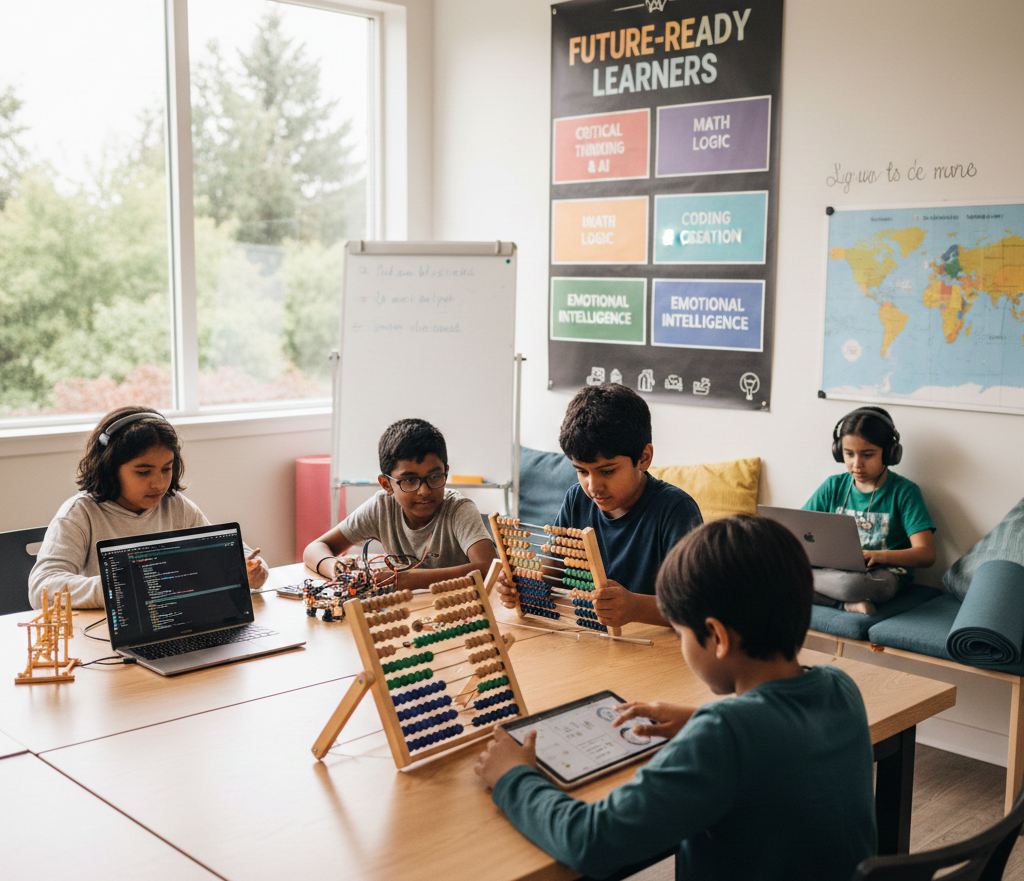
Parents searching for a science enrichment class in Surrey BC or Delta BC are usually looking for the same thing: a program where their child is actively building, testing and problem-solving, not just sitting through a lecture.
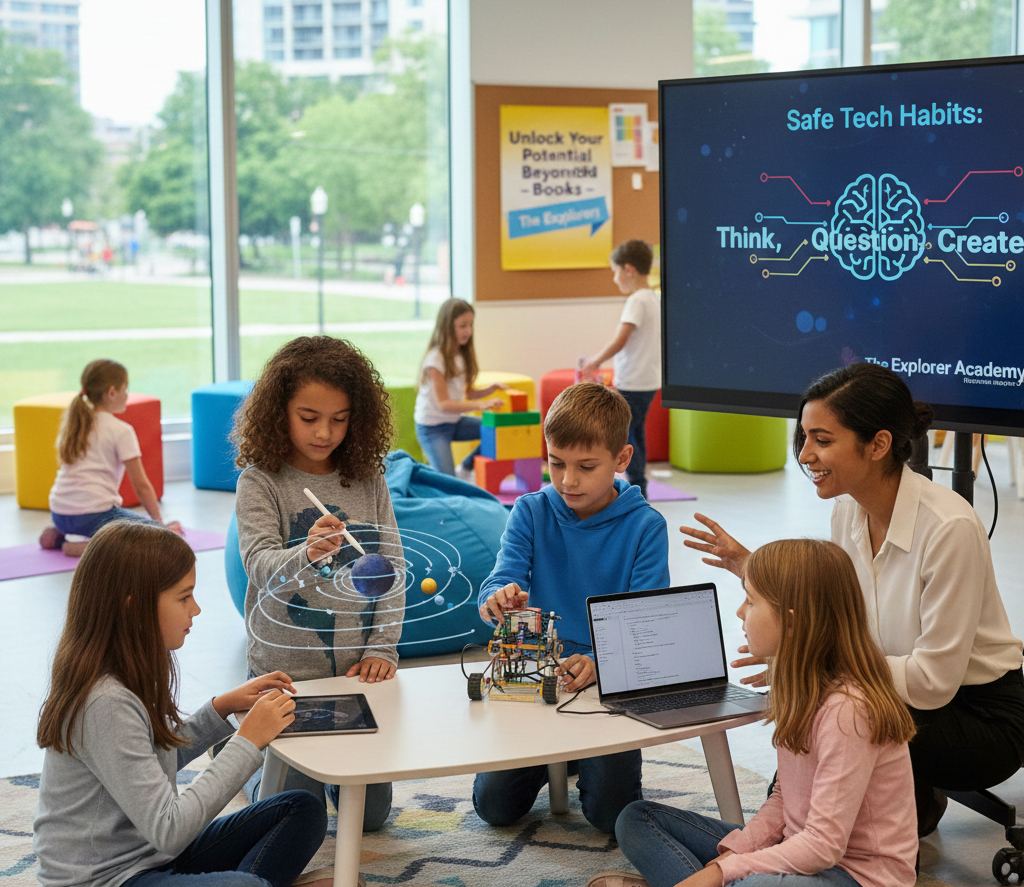
At Explorer Academy, every STEM session is structured to make integration happen naturally:
- Warm-Up (15 min): A quick science, math, or coding challenge to get kids thinking
- Lesson (30 min): A new STEM concept explained through a real-world example
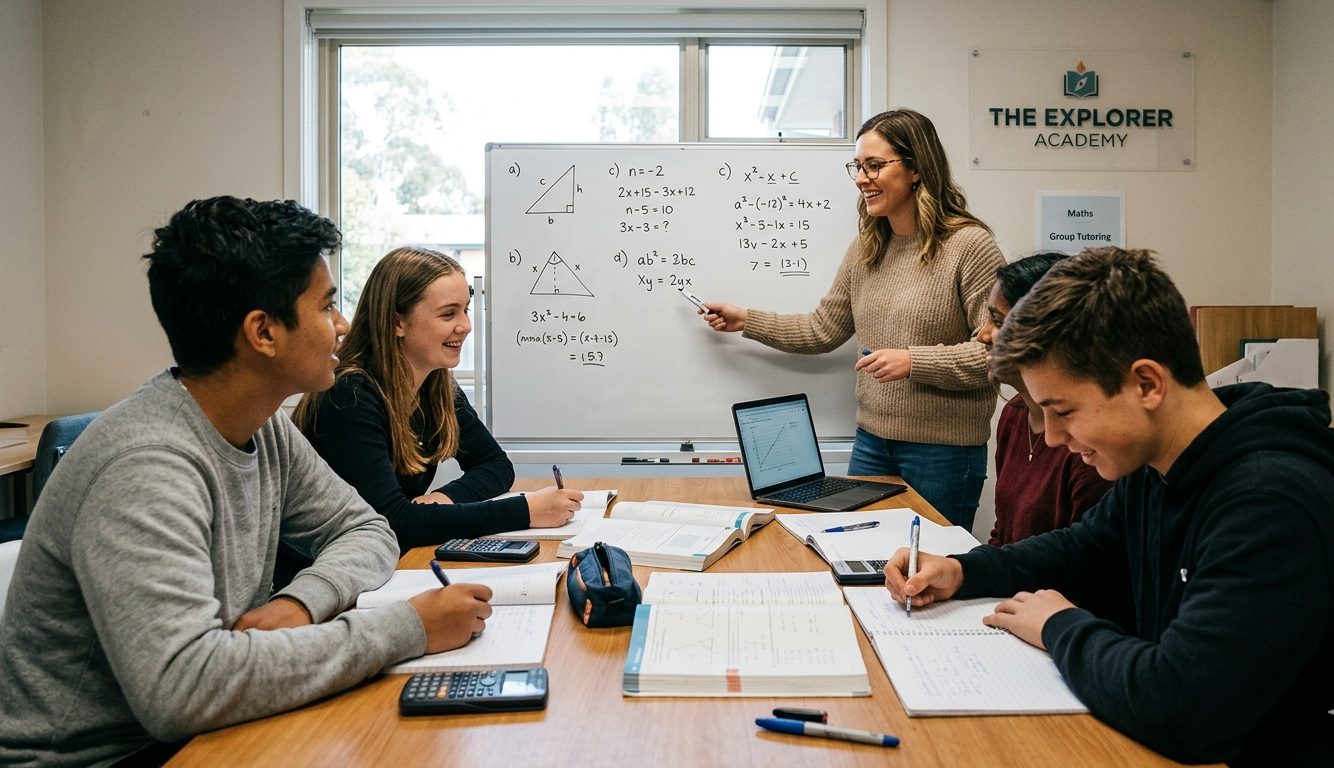
- Practice (45 min): A hands-on project — building circuits, programming robots, testing designs
- Wrap-Up (30 min): Sharing results, discussing what worked, and problem-solving as a group
This runs twice a week in 1-hour sessions, moving from beginner concepts (gravity, magnetism, simple machines, block-based coding) to more advanced, real-world engineering and coding challenges as kids progress.
How Do I Find STEM Learning for Kids Near Me?
If you're comparing options for STEM learning for kids near me in Surrey or Delta, look for a program that:
- Combines at least two STEM subjects per session, rather than isolated worksheets
- Keeps class sizes small so instructors can guide hands-on building and troubleshooting
- Follows a clear curriculum path (beginner → intermediate → advanced), not one-off activities
- Is led by instructors trained specifically in child-friendly STEM teaching, not just subject experts
Explorer Academy, based in Delta, BC and serving families across Surrey and Delta, was built around exactly this approach.
Ready to See It in Action?
If your child is naturally curious but classroom worksheets aren't holding their attention, an integrated, hands-on STEM enrichment class is often the missing piece. Explorer Academy's STEM Exploration program is built around the subject-integration approach covered in this article, from beginner circuits and coding to advanced engineering challenges.
Book a free trial class and let your child experience a hands-on, cross-subject session before you commit to a full program.
About The Explorer Academy
Educator and contributor at The Explorer Academy, dedicated to engaging and enrichment-focused learning for kids.