How to Choose a Physics Group Tutoring Program in Surrey, BC

Physics is one of those subjects where the right learning environment makes the difference between constant frustration and real understanding. If you are evaluating physics group tutoring in Surrey, you are likely weighing several options: large learning centres, independent tutors or specialized STEM academies and trying to figure out which one actually delivers results.
This guide breaks down exactly what to evaluate, what to avoid, and the questions worth asking before choosing a physics group tutoring program in Surrey, BC.
Why Does the Right Physics Tutoring Program Matter So Much?
Physics isn't memorization-based — it's built on logic, conceptual reasoning, and applied problem-solving. Struggling in physics usually isn't about ability; it's about a mismatch between how a concept is taught and how it needs to be understood.
Common signs of the wrong fit include:
- A batch too large for real interaction, so doubts go unanswered
- A teaching style focused on formulas instead of the reasoning behind them
- No structured practice for numericals, tests, or exam-style questions
- A pace that doesn't match the actual school curriculum
The right program reverses all of this — turning physics from an intimidating subject into one that can be reasoned through with confidence.
What Is Physics Group Tutoring and How Does It Work?
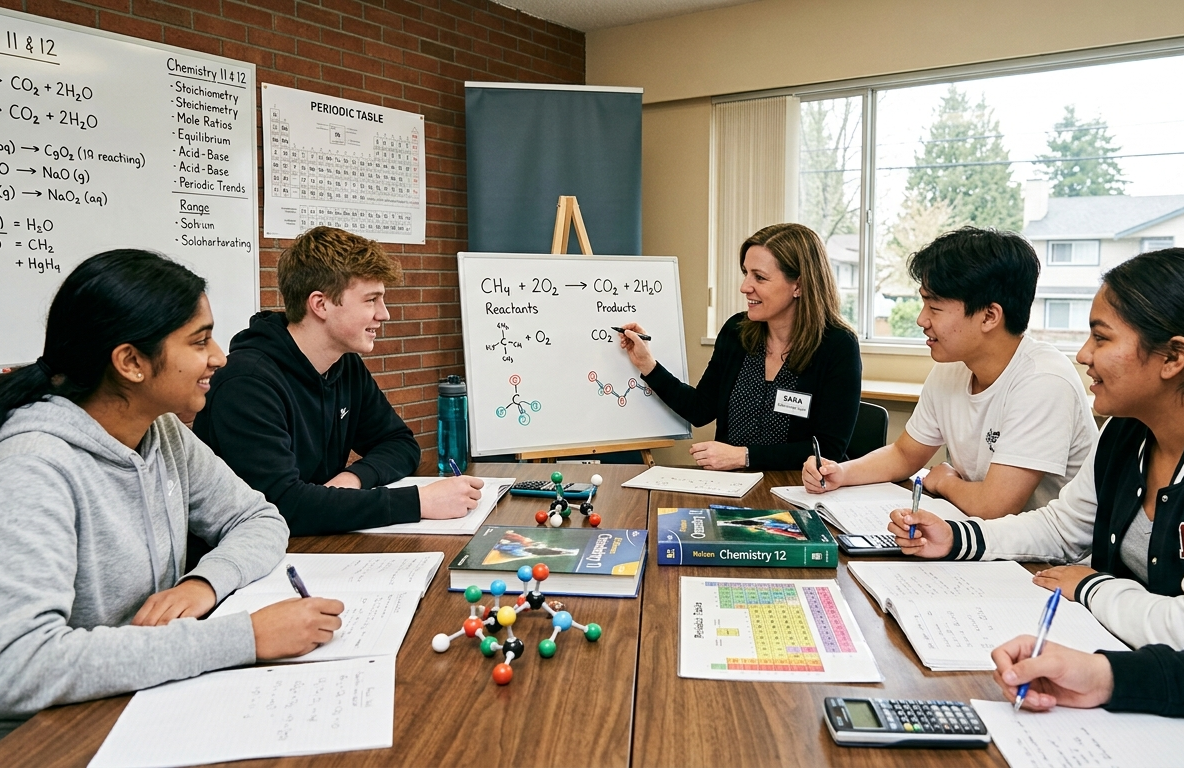
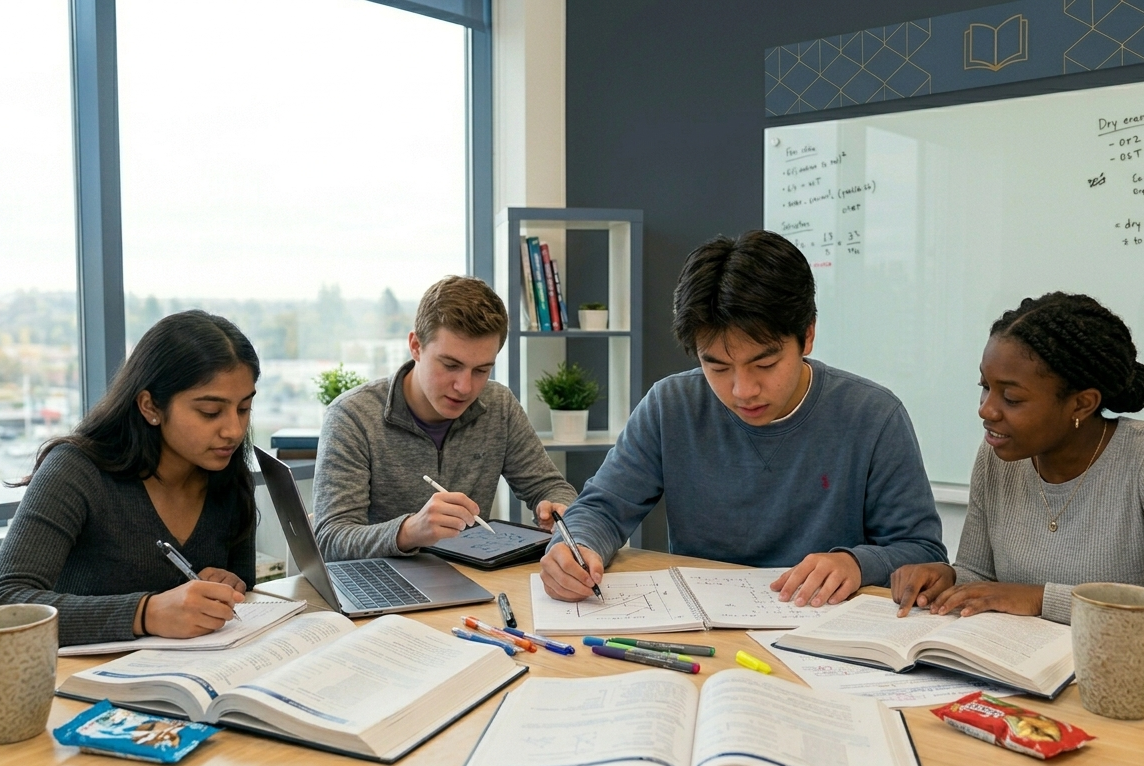
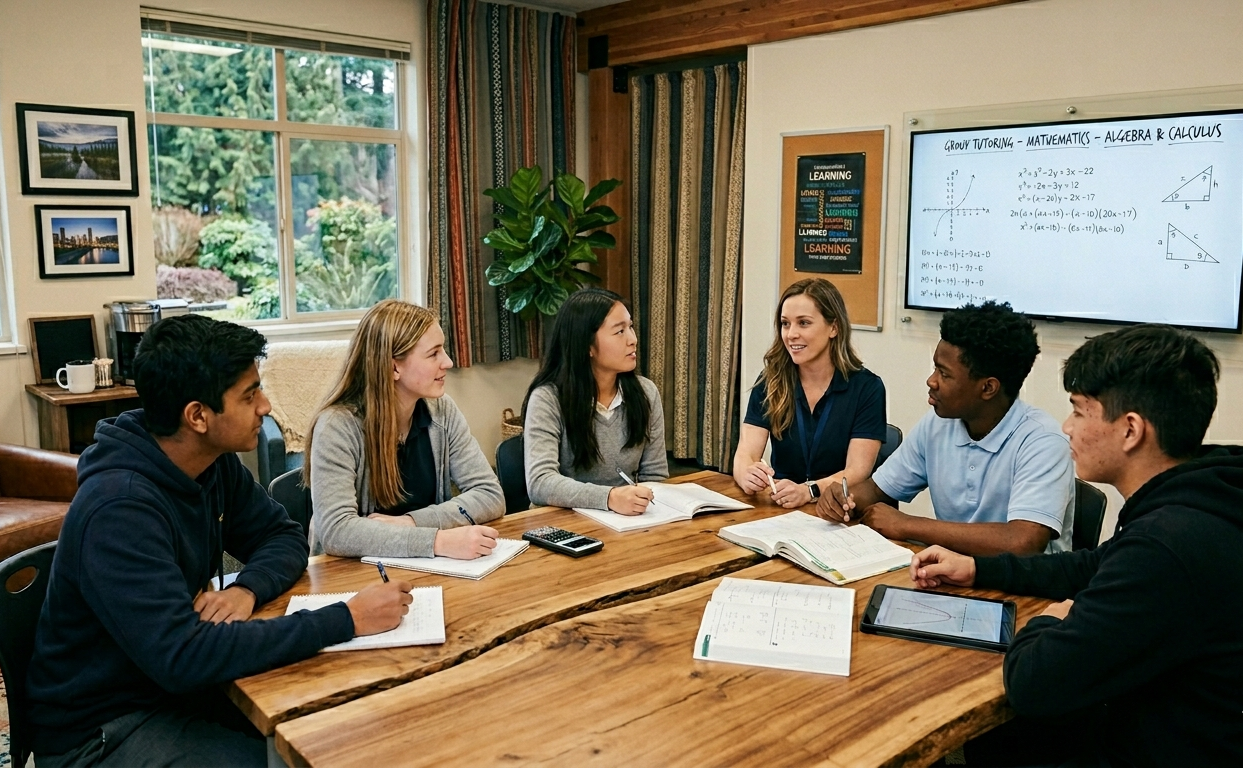
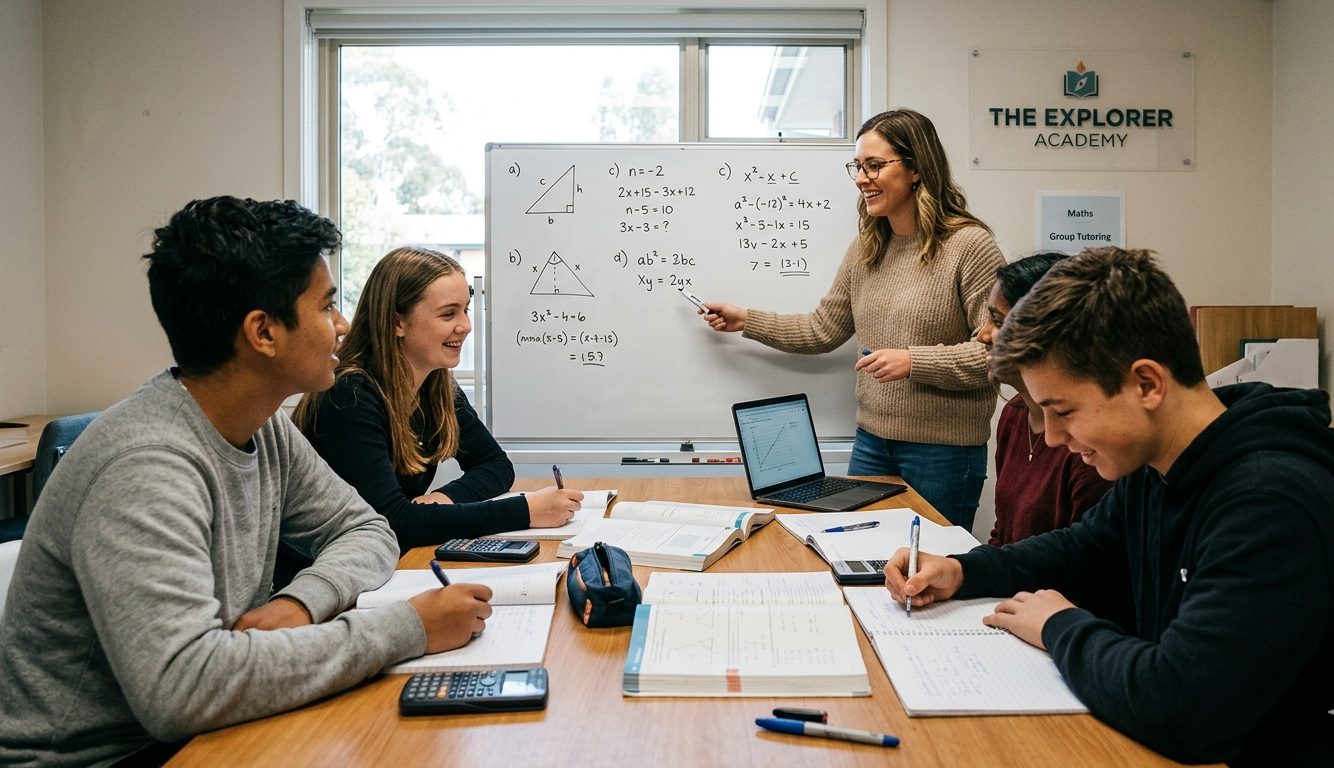
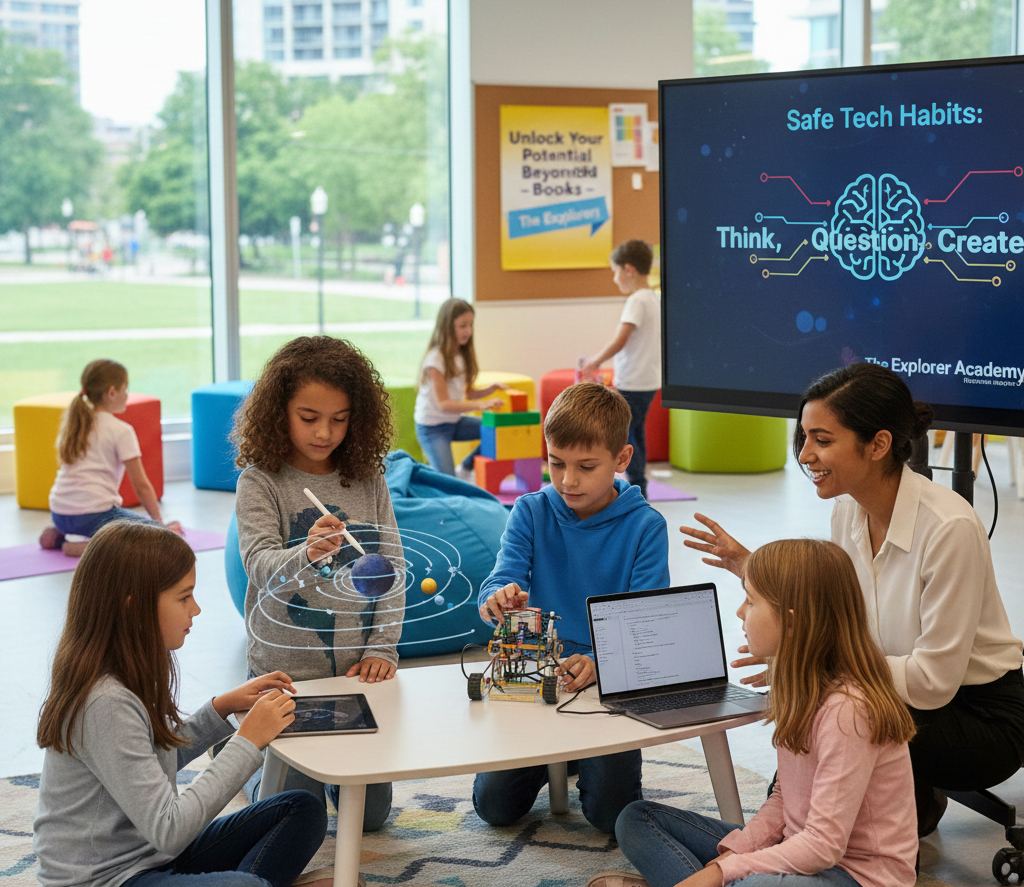
Physics group tutoring is a learning format where a small number of students typically 4 to 8 study together under a dedicated tutor, combining the personal attention of one-on-one tutoring with the benefits of collaborative, peer-based learning. Students actively participate, solve problems together and still get individual doubt-clearing, rather than sitting through a passive lecture or studying in isolation.
It differs from:
- Large classroom coaching — low interaction, fixed pacing for everyone
- Private one-on-one tutoring — highly personalized but costlier, without peer discussion
- Self-study or online videos — no real-time doubt resolution or accountability
For most high school students working through BC's Physics 11 and Physics 12 curriculum, group tutoring sits at the intersection of cost-efficiency, structure, and personal attention.
What Are the Signs That Physics Tutoring Support Is Needed?
Before comparing programs, it's worth confirming the need is specific. Common indicators include:
- Formulas are memorized but not understood — applying them to a new question type fails
- Numerical problems take far longer than they should, or get abandoned midway
- Test scores don't reflect the time invested in studying
- Physics homework gets avoided or triggers the "I just don't get it" response
- Topics like motion, forces, energy, waves, or electricity feel disconnected from each other
Two or more of these usually point to a need for structured, guided practice — not just more solo study hours.
What Factors Should Be Evaluated When Choosing a Physics Group Tutoring Program in Surrey, BC?
What Batch Size Actually Makes Group Tutoring Effective?
Batch size is the single biggest factor determining whether "group tutoring" delivers on its promise. A group of 15–20 functions like a mini classroom — doubts get lost, and quieter students disengage. An effective batch size typically falls in the 1:5 to 1:8 student-to-tutor ratio, small enough for the tutor to track individual progress and respond to questions in real time.
Does the Program Align with the BC Physics 11 and Physics 12 Curriculum?
Physics isn't learned in a vacuum — it follows a specific curriculum, pacing and assessment style set by BC schools. A strong program should:
- Follow the BC physics curriculum closely, covering kinematics, dynamics, forces, energy and momentum, waves and electricity and magnetism in a logical sequence
- Adapt to the pace of the student's actual school and teacher, rather than running an unrelated generic schedule
- Prepare students for the exact type of test and exam questions their school uses
Is the Teaching Approach Concept-First or Formula-First?
This is a key question to ask any program directly. Formula-first teaching "here's the equation, plug in the numbers" produces students who pass simple tests but collapse on unfamiliar questions. A concept-first approach explains the logic and real-world reasoning behind an idea before introducing the formula and the problem-solving technique, which builds durable understanding.
What Qualifications Should a Physics Tutor Have?
Teaching physics well requires both subject mastery and the ability to simplify abstract ideas. Relevant qualifications to look for:
- A strong academic background in physics, engineering, or a related science field
- Specific experience teaching high school–level physics (Grade 11/12), not physics as a secondary subject
- Familiarity with BC's provincial curriculum and assessment expectations
How Is Numerical Problem-Solving Actually Taught?
Physics exams are numerical-heavy, so this deserves a direct question: how does the program build problem-solving skills, not just concept recall? A well-run program typically offers:
- Step-by-step problem-solving frameworks for different question types
- Regular, structured practice sets — not occasional homework
- Guided correction of common mistakes (unit errors, misapplied formulas, sign conventions)
How Does Doubt-Clearing Work Within a Group Setting?
A relevant question: what happens when one student is stuck on something the rest of the group has already grasped? Effective programs build in space for individual doubt-solving even within a group format through smaller sub-discussions, dedicated Q&A time or direct follow-up outside the session.
How Are Progress and Performance Tracked?
A program without regular assessment has no reliable way to measure improvement. Look for:
- Periodic tests or quizzes to track retention
- Specific, actionable feedback — not just a grade
- Visible, measurable progress over weeks or months, not only at term-end
Is the Format In-Person, Online or Hybrid and Which Fits Better?
Different learning styles suit different formats. Some students focus best in person; others do well online with the right structure. Worth confirming: how doubt-clearing and interaction are maintained if the format is online, and whether a hybrid option exists.
How Accessible Is the Program Location in Surrey or Delta?
For anyone searching physics tutoring for high school Surrey, proximity and scheduling ease directly affect consistency. A program that's easy to reach or easy to log into is one that's realistically attended week after week through a busy school term.
How Does Cost Compare Against What's Actually Included?
Group tutoring is generally more affordable than one-on-one tutoring, but price alone isn't the full picture. Compare what's included sessions per week, access to doubt-clearing outside class, test materials, and progress reporting rather than comparing hourly rates in isolation.
Is a Trial or Demo Session Available Before Enrolling?
A program confident in its teaching should offer a trial or demo class before commitment. This makes it possible to evaluate teaching style, batch dynamics, and tutor rapport directly, rather than relying solely on website claims.
What Do Reviews and Track Records Indicate?
Reviews, testimonials, or outcome data improved grades, university admissions, specific feedback on how concepts were explained are strong signals. A consistent track record specific to Surrey and Delta carries more weight than generic, unverifiable national reviews.
Physics Group Tutoring vs. One-on-One Tutoring: Which One Fits Better?
Group tutoring in Surrey is generally more affordable than one-on-one tutoring, since the cost is shared across a small batch rather than covering a single dedicated hour. It still offers moderate-to-high personal attention when batch sizes stay small, and it adds something private tutoring can't: peer learning, where students benefit from hearing each other's questions and approaches. The fixed batch schedule also tends to build stronger accountability and consistency, since sessions run on a set routine rather than depending entirely on individual discipline.
One-on-one tutoring, on the other hand, offers the highest level of personalization — pacing, focus areas and teaching style can be shaped entirely around a single student. It comes at a higher hourly cost and without the collaborative element of group discussion and its consistency depends more on the student's own follow-through between sessions.
In practice, group tutoring tends to suit students who learn well through discussion and benefit from structured peer pacing, while one-on-one tutoring fits students who need highly customized, individual pacing for example, those significantly behind or significantly ahead of their class level. For most high school physics students, a small-batch group tutoring program strikes the best balance: enough individual attention to resolve doubts, plus the accountability and engagement that comes from learning alongside peers.
What Are the Red Flags to Watch For in a Physics Tutoring Program?
- Large batches marketed as "small group" — anything above 10–12 isn't truly small
- No mention of BC curriculum alignment or grade-specific focus
- No trial class or transparent way to observe a session beforehand
- Vague answers about how numerical and problem-solving are actually taught
- No system for tracking or communicating progress
Frequently Asked Questions
Q1: What is the ideal batch size for physics group tutoring? A: A ratio of 1 tutor to 5–8 students is generally considered ideal for high school physics — small enough for individual doubt-clearing, large enough to preserve peer discussion and collaborative problem-solving.
Q: Is group tutoring effective for Physics 11 and Physics 12 in BC? |A: Yes, when the program aligns with the BC curriculum and keeps batch sizes small. Physics benefits especially from group discussion, since numerical problem-solving improves when multiple approaches are worked through collectively.
Q: How is physics group tutoring different from regular school classes? A: School classes are larger and follow a fixed pace for everyone. Group tutoring uses smaller batches, allows more direct tutor interaction, and can adapt pacing or revisit topics that need more attention.
Q: Should physics tutoring in Surrey be online or in-person? A: Both formats can work well. In-person tends to suit those who focus better away from home distractions; online offers scheduling flexibility. The more important factor is whether the program maintains small batches and genuine doubt-clearing in either format.
Q: How can progress in a physics tutoring program be measured? A: Reliable indicators include improved test scores, faster and more accurate numerical problem-solving, increased initiative in asking questions, and specific, consistent feedback from the tutor.
Choosing the Right Physics Group Tutoring Program in Surrey and Delta
The strongest physics group tutoring program in Surrey, BC isn't defined by marketing, it's defined by genuine concept clarity, structured numerical practice, and enough individual attention within the group to stay engaged rather than lost in a crowd.
The Explorer Academy's physics group tutoring is built around a small 1:5 batch ratio, concept-first teaching, structured problem-solving practice, and continuous feedback designed specifically around what BC high school students need for Physics 11 and Physics 12.
Book a free demo session to experience the teaching approach directly.
About The Explorer Academy
Educator and contributor at The Explorer Academy, dedicated to engaging and enrichment-focused learning for kids.