Chemistry Group Tutoring in Surrey & Delta: The Complete Guide for High School Students
If your child is staring at a periodic table wondering why none of it makes sense, you are not alone. Chemistry 11 and Chemistry 12 are two of the most commonly repeated courses in BC high schools not because students aren't capable, but because chemistry is taught fast and one missed concept (like mole ratios or reaction mechanisms) tends to snowball into every unit after it.
This is exactly the gap chemistry group tutoring in Surrey and Delta is built to close. This guide walks you through what it actually is, how it works, what it costs, how to tell if your child needs it and how to choose a program that delivers real results, not just extra homework time.
What Is Chemistry Group Tutoring?
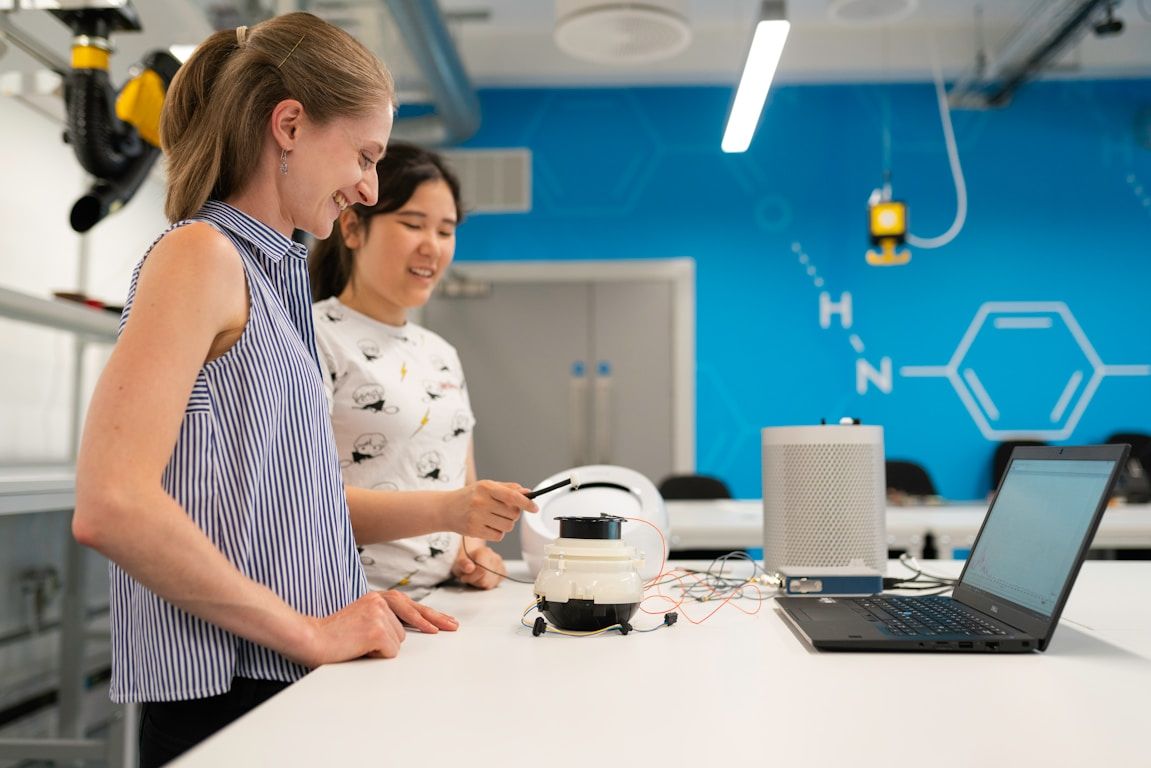
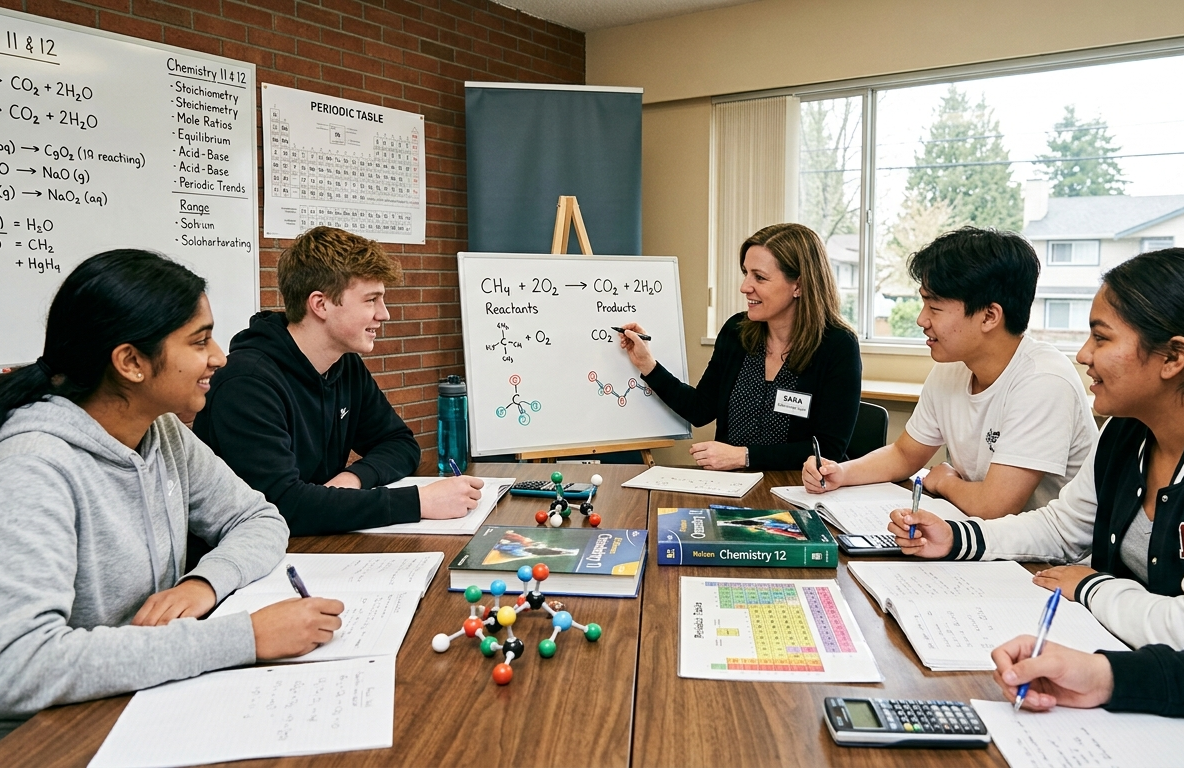
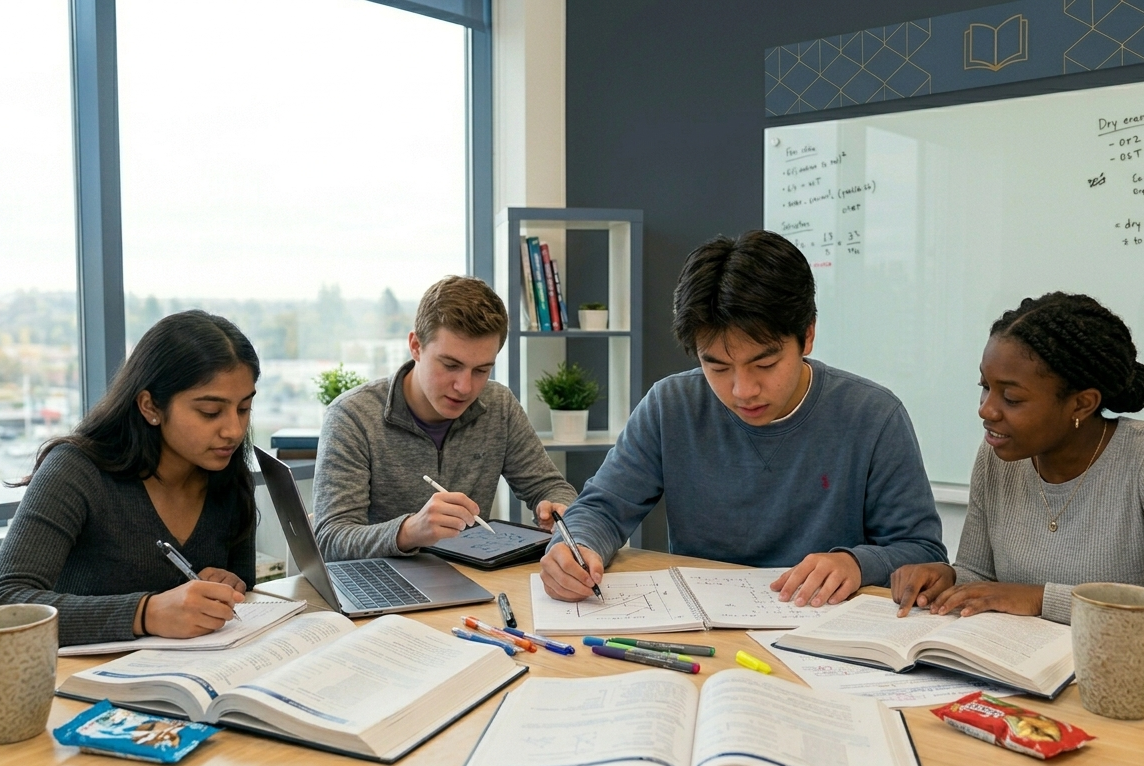
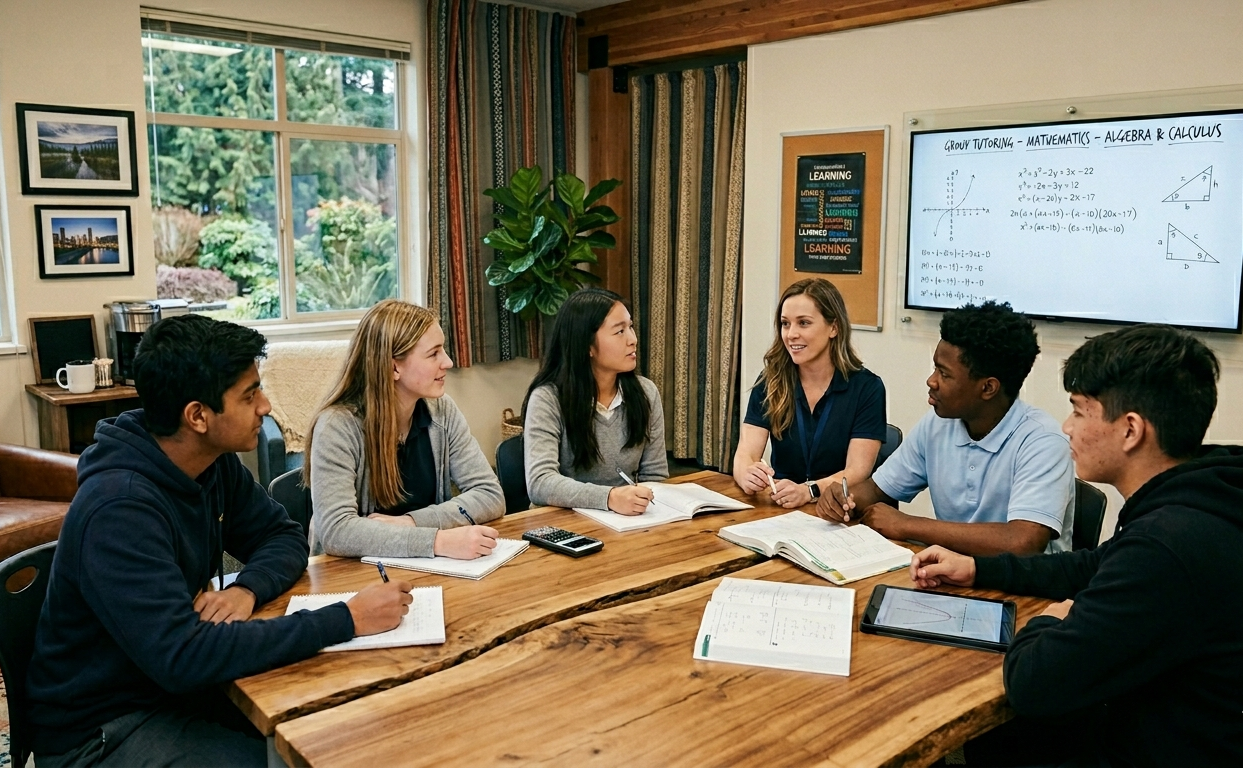
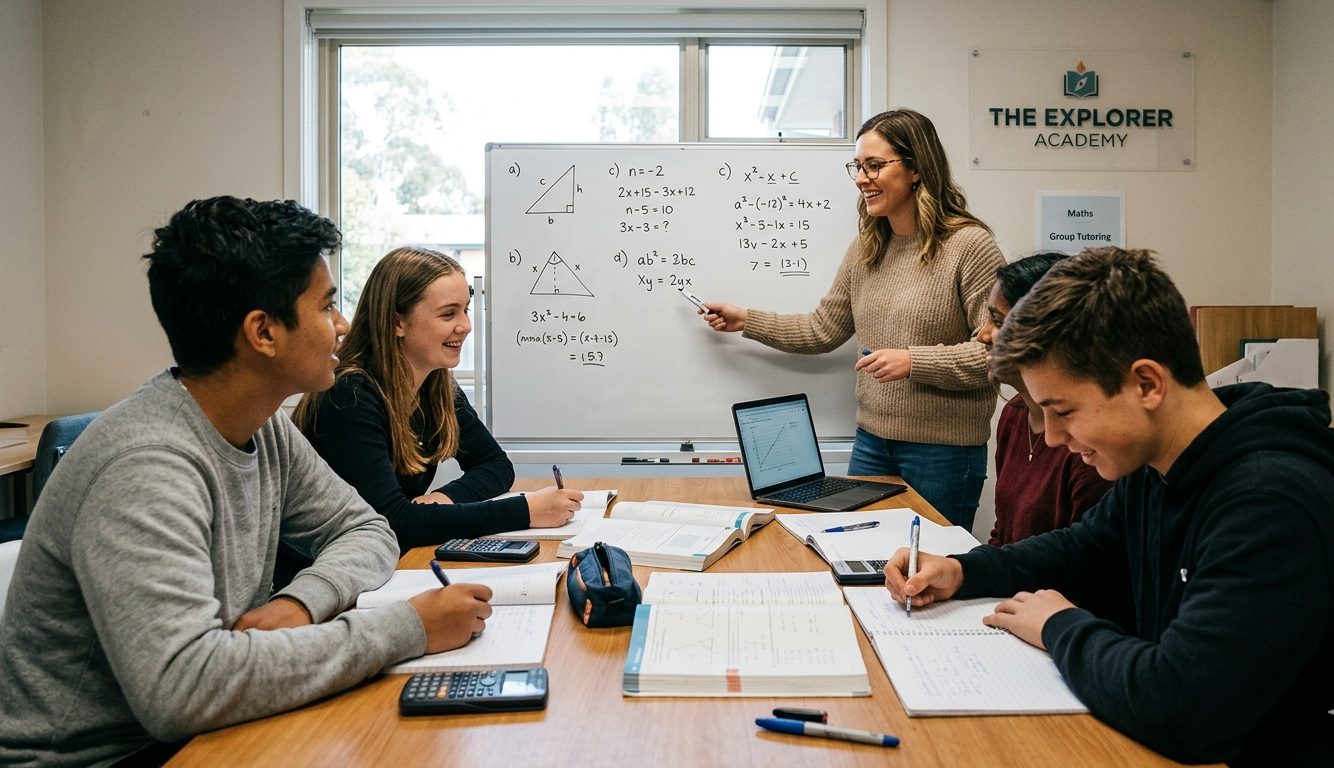
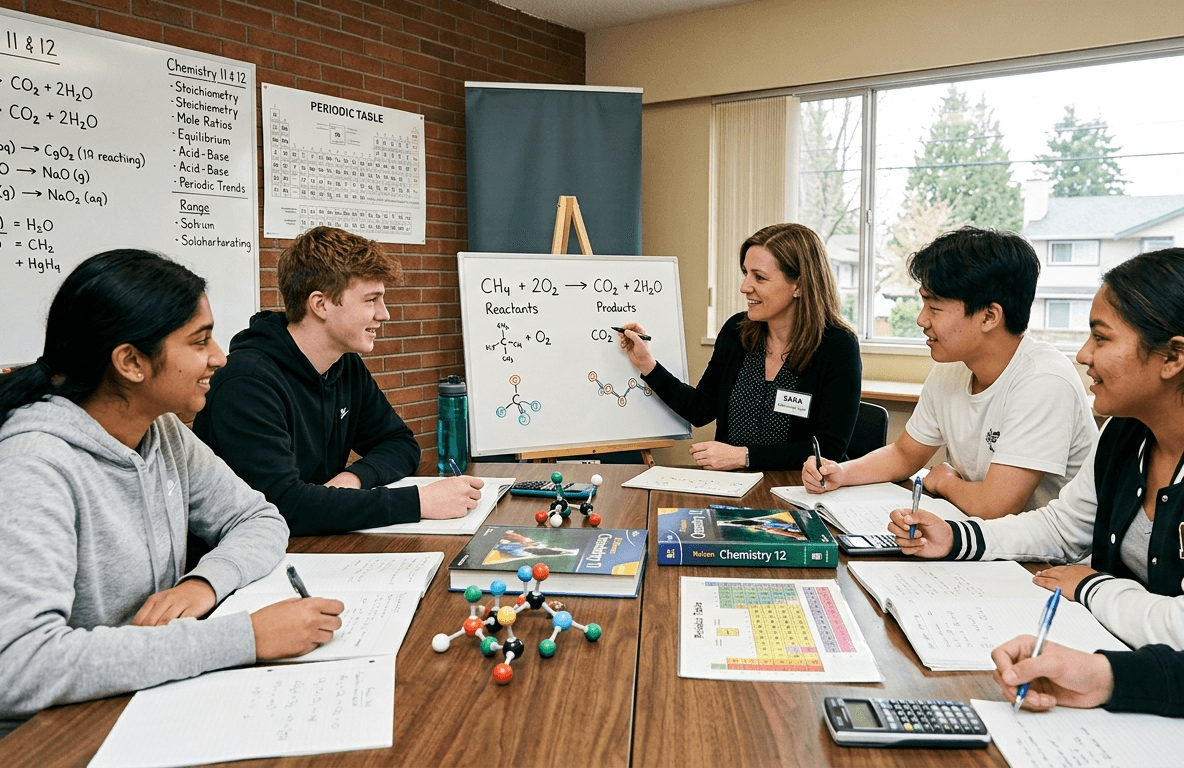
Chemistry group tutoring is a small-class learning format where a handful of students at a similar grade and ability level work through the same curriculum together, guided by a tutor who can still give each student individual feedback. It sits between two extremes: the one-to-thirty ratio of a school classroom, and the higher cost of private one-on-one lessons.
A well-run session typically combines:
- Concept teaching — breaking down reaction mechanisms, bonding and periodic trends into visual, step-by-step explanations
- Guided problem-solving — working through equation balancing and numerical questions as a group, so students see multiple ways to approach the same problem
- Weekly practice sheets — reinforcement homework with full explanations, not just answer keys
For families searching specifically for chemistry groups tutoring Surrey BC or Delta BC, the local piece matters too: a program that's mapped to what's actually being taught in Surrey and Delta secondary schools will always outperform a generic, one-size-fits-all curriculum.
Why High School Chemistry Trips Students Up
Before comparing tutoring options, it helps to understand why chemistry group tutoring for high school students in Surrey and Delta has become so in-demand in the first place. A few patterns show up again and again:
- Chemistry builds on itself. Miss the logic behind moles and stoichiometry in the first few weeks, and organic chemistry later in the course becomes nearly impossible to follow.
- It mixes three very different skill types. Physical chemistry needs math fluency, inorganic chemistry needs pattern recognition (periodic trends), and organic chemistry needs spatial/structural thinking. Few students are naturally strong at all three.
- Board exams reward structured answers, not just correct ones. Students often know the right answer but lose marks because their written response isn't structured the way BC exam markers are trained to look for.
- Classroom pace doesn't slow down for anyone. A teacher managing 30 students can't circle back for the five who didn't quite get reaction mechanisms — group tutoring can.
What to Expect From Chemistry Group Tutoring (Surrey & Delta)
Programs vary but a solid chemistry group tutoring experience for high schoolers usually looks something like this: sessions run in small groups of 3–6 students, typically for 90 minutes once a week. Most reputable providers teach in-person rather than online, since chemistry's diagrams, structures, and lab-based thinking are genuinely hard to teach well through a screen. The curriculum is mapped directly to BC Science Chemistry 11 and 12, with students grouped by grade level, and the commitment usually runs in cycles — commonly around three months because real confidence in chemistry builds over consistent weeks, not a single cram session. Between sessions, students get weekly practice sheets with full worked explanations and even in a group setting — a good tutor still reviews each student's practice sheets and exam-style answers individually.
This structure is deliberately different from a drop-in homework club. The goal isn't to babysit assignments — it's to systematically rebuild understanding of reaction mechanisms, strengthen numerical calculation and equation balancing, and train students to write exam responses that actually score full marks.
Chemistry 11 vs. Chemistry 12: What's Covered
A common question from parents searching for chemistry group tutoring for high school Surrey or Delta families is whether a program covers both grades — and it matters, because the two courses build directly on each other.
- Chemistry 11 lays the foundation: atomic structure, periodic trends, chemical bonding, the mole concept and basic reactions.
- Chemistry 12 builds on that base with more advanced organic chemistry, equilibrium, acid-base reactions, electrochemistry and more demanding lab and exam expectations.
Good group tutoring programs group students by grade and ability, so a Chemistry 11 student isn't lost in a room full of Chemistry 12 content and vice versa while both streams get the same standard of curriculum-mapped teaching.
Group Tutoring vs. One-on-One: Which Is Right for Your Child?
This is one of the most common questions Surrey and Delta parents ask before enrolling. Here's an honest comparison.
On cost, group tutoring in Delta is naturally lower since the fee is shared across several students while one-on-one sessions carry the full cost per student. On peer learning, group tutoring has a real edge — students learn from each other's questions and mistakes in a way that purely tutor-led, one-on-one sessions simply can't replicate. When it comes to pacing, group sessions still pace well as long as students are grouped by similar ability, though one-on-one remains the more fully customized option. Group settings also tend to help with confidence and social comfort, since struggling with chemistry no longer feels like an isolated experience — a benefit one-on-one lessons don't offer in the same way. As a general rule, group tutoring suits most students who need structured, ongoing support, while one-on-one tutoring is better reserved for students who need highly specific, intensive remediation.
For the majority of students, group tutoring delivers comparable results to private lessons at a lower cost, because chemistry, more than most subjects, benefits from shared problem-solving. Students often understand a concept better after hearing a peer's question answered than their own.
Signs Your Child Could Benefit From Chemistry Group Tutoring
If you are weighing whether to look into chemistry group tutoring in Surrey or Delta, these are common signals parents mention:
- Chemistry grades have dropped compared to other science subjects
- Your child understands concepts in class but can't apply them in tests
- Homework is taking far longer than it should, or being avoided altogether
- Reaction mechanisms and equation balancing feel like memorization rather than logic
- Your child is heading into Chemistry 11 or 12 and wants a head start before the pace picks up
- Lab reports and exam-style written answers consistently lose marks despite "knowing the material"
None of these mean a student isn't capable — they usually just mean the pace or format of a 30-student classroom isn't working for that particular child, which is precisely the gap small-group instruction is designed to close.
How to Choose a Chemistry Group Tutoring Program in Surrey or Delta
Not all programs are equal. Before enrolling at The Explorer Academy, it's worth checking a provider against this list:
- Is it mapped to the BC curriculum? Generic chemistry content that isn't aligned to what's tested in BC schools wastes study time.
- How small is the group, really? 3–6 students is the range where individual attention is still realistic; anything larger starts to resemble a classroom again.
- Is it in-person or online? Chemistry relies heavily on diagrams, structures, and lab-based thinking — most students learn it better face-to-face.
- Does the tutor review individual work? Ask specifically whether practice sheets and exam-style answers are corrected per student, not just marked as a group.
- Is there a trial option? A free demo class lets you see the teaching style before committing to a multi-month cycle.
- Does the program serve your specific area? A provider genuinely established for chemistry group tutoring in Surrey BC and Delta BC (with a real, local teaching location) will understand the schools, exam patterns and pacing your child is dealing with far better than an online-only, out-of-province option.
The Bottom Line
Chemistry doesn't have to be the subject that derails an otherwise strong report card. With the right structure — small groups, curriculum-mapped teaching and consistent weekly reinforcement — students in Surrey and Delta can move from memorizing reactions to actually understanding them, and from "getting it in class" to proving it on the exam.
If you are ready to see the teaching style in action, you can also book a free demo class before committing to a full cycle.
About The Explorer Academy
Educator and contributor at The Explorer Academy, dedicated to engaging and enrichment-focused learning for kids.